
Last updated September 10, 2026
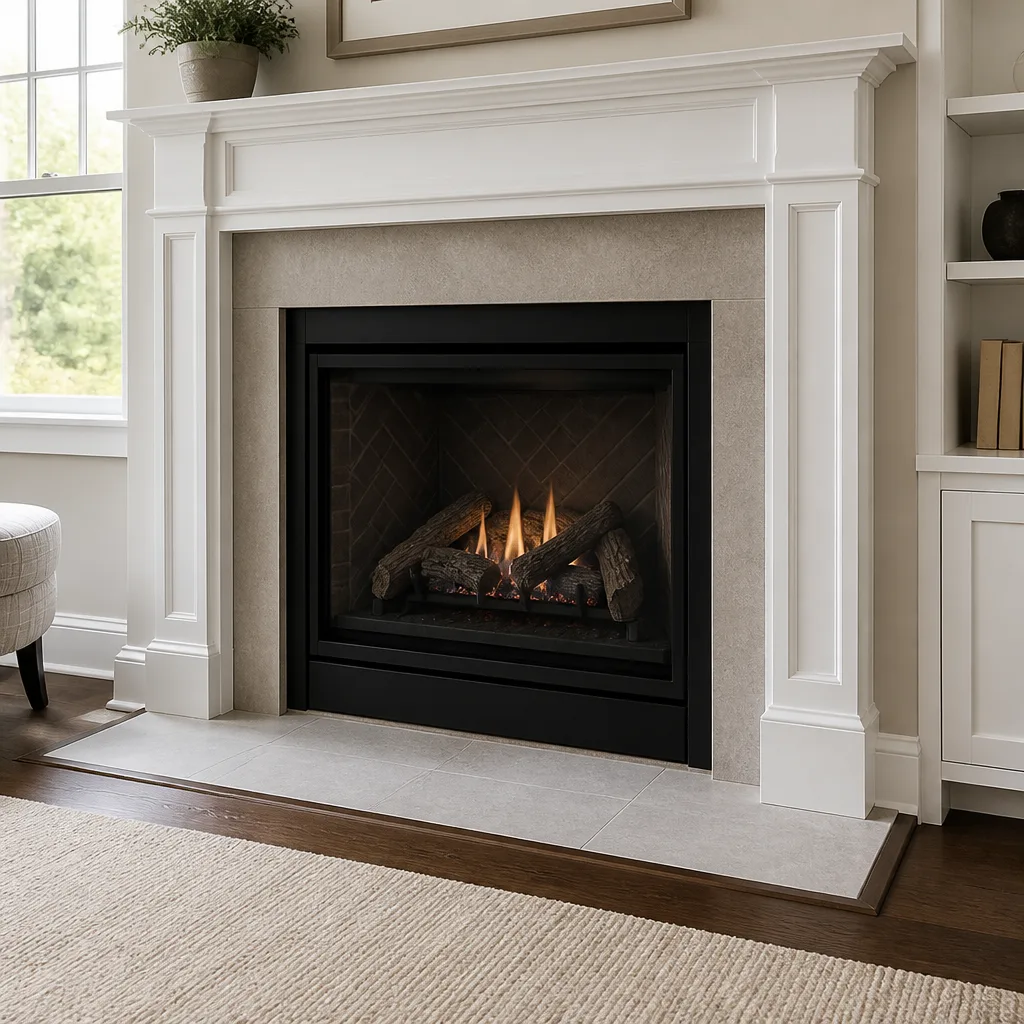
Level 1 sweep and inspection to the NFPA 211 annual standard - flue, crown, cap, and flashing checked and photographed
Chimney sweep logs do not sweep chimneys. They loosen some creosote - which then falls where a brush and vacuum still have to collect it.
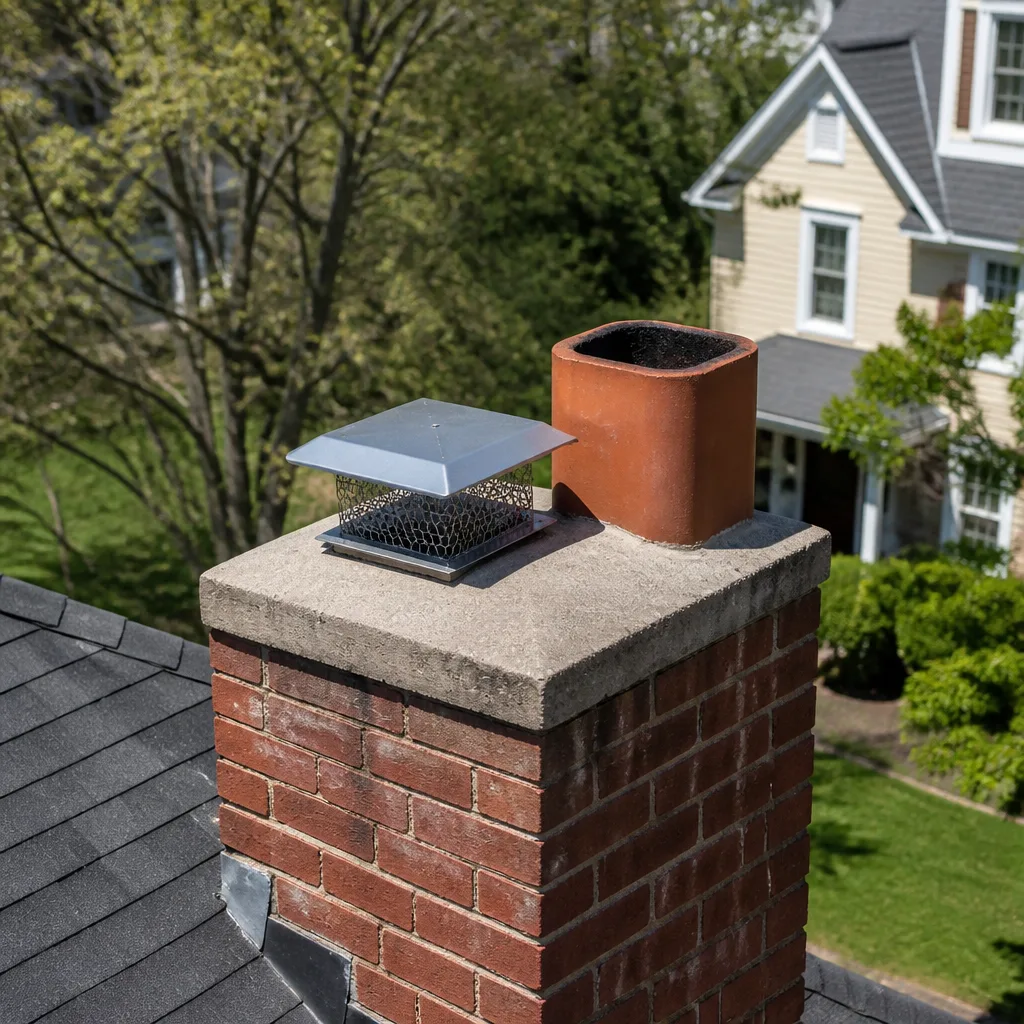
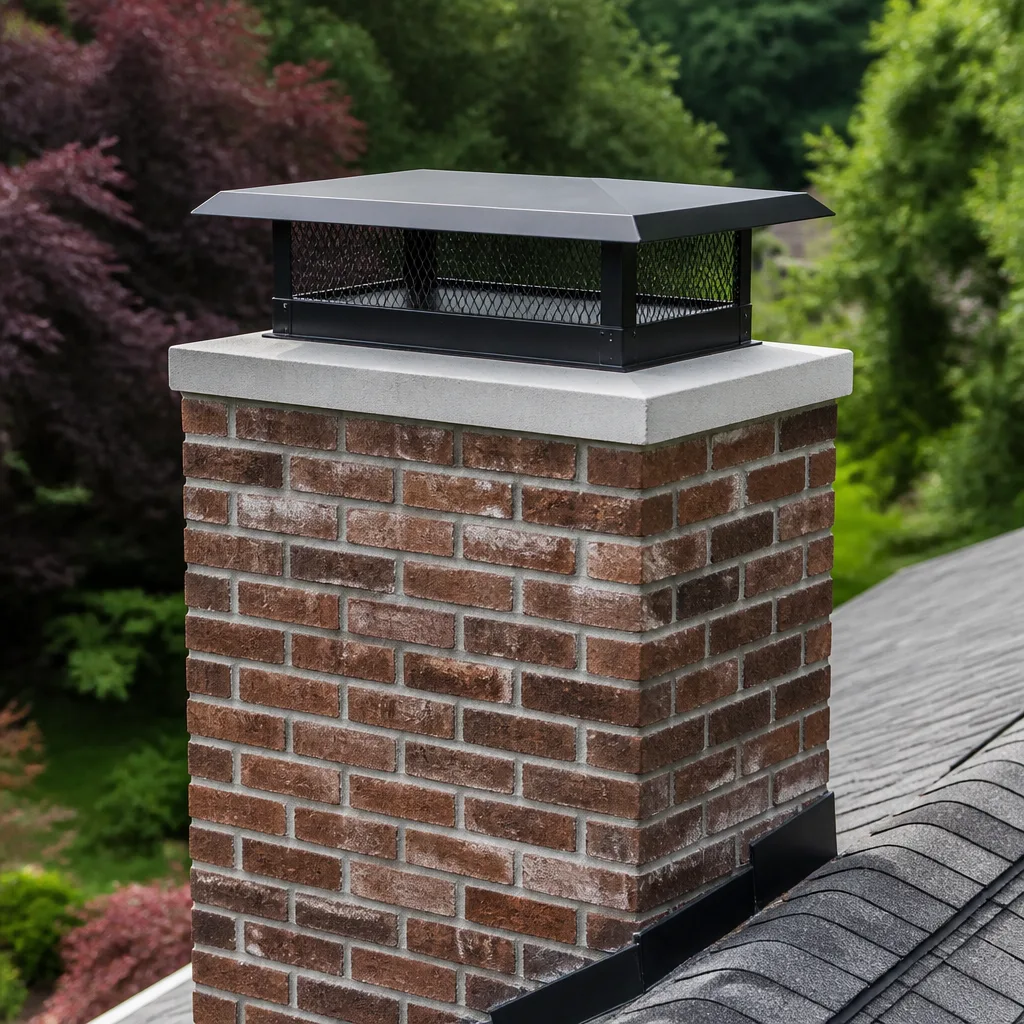
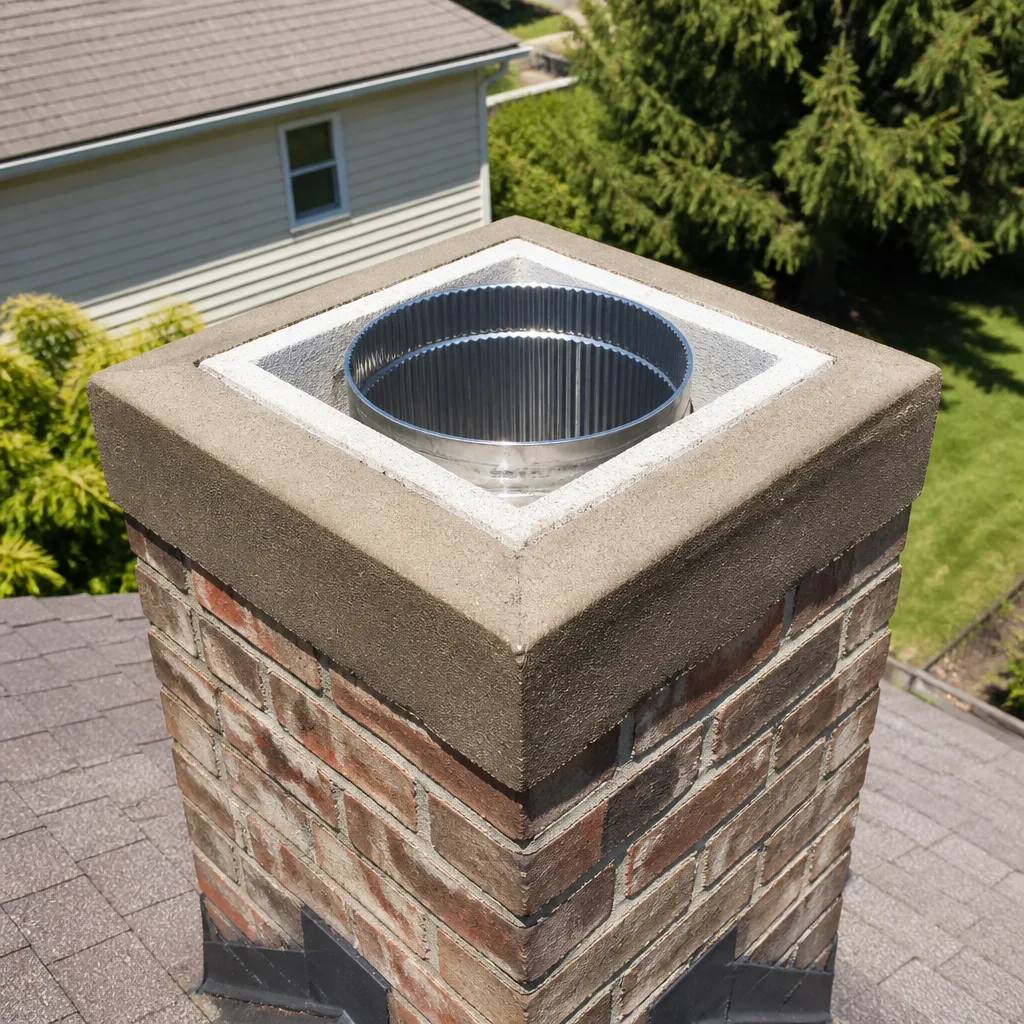
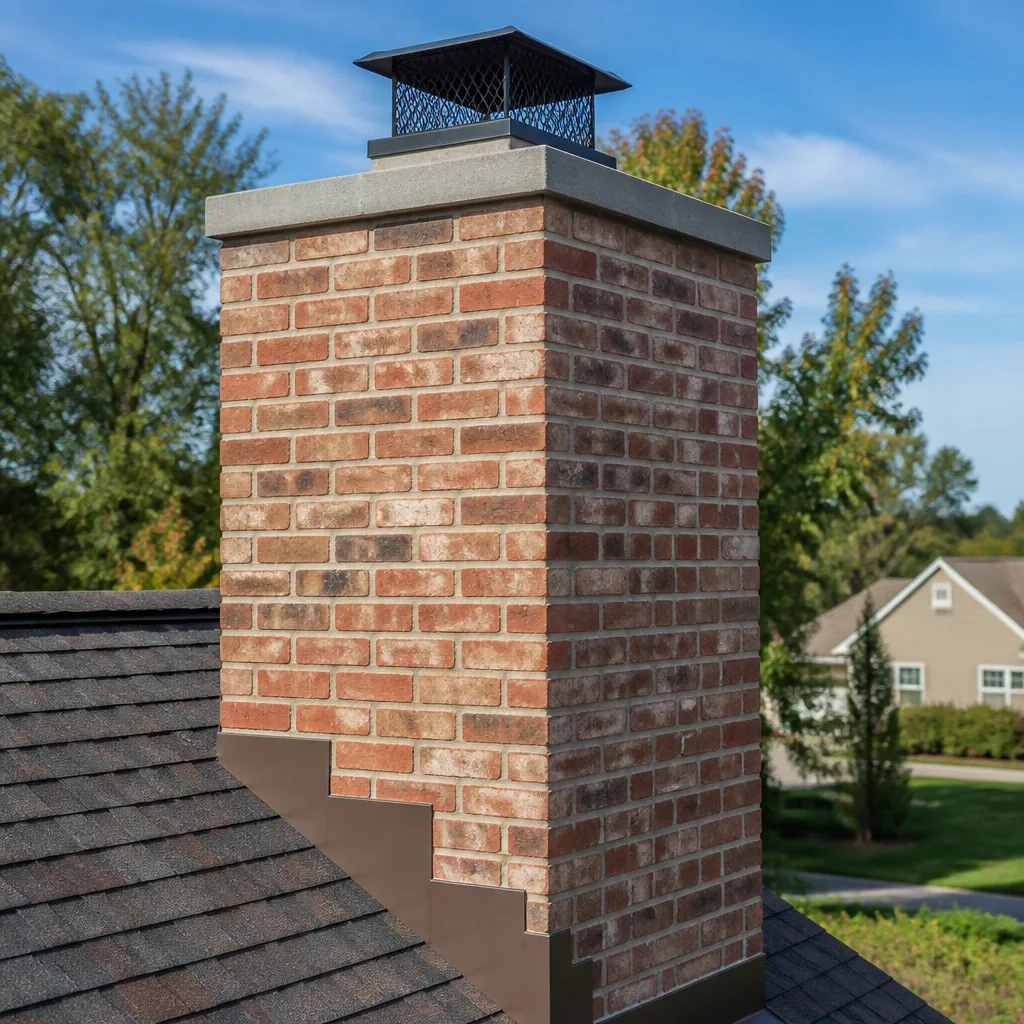
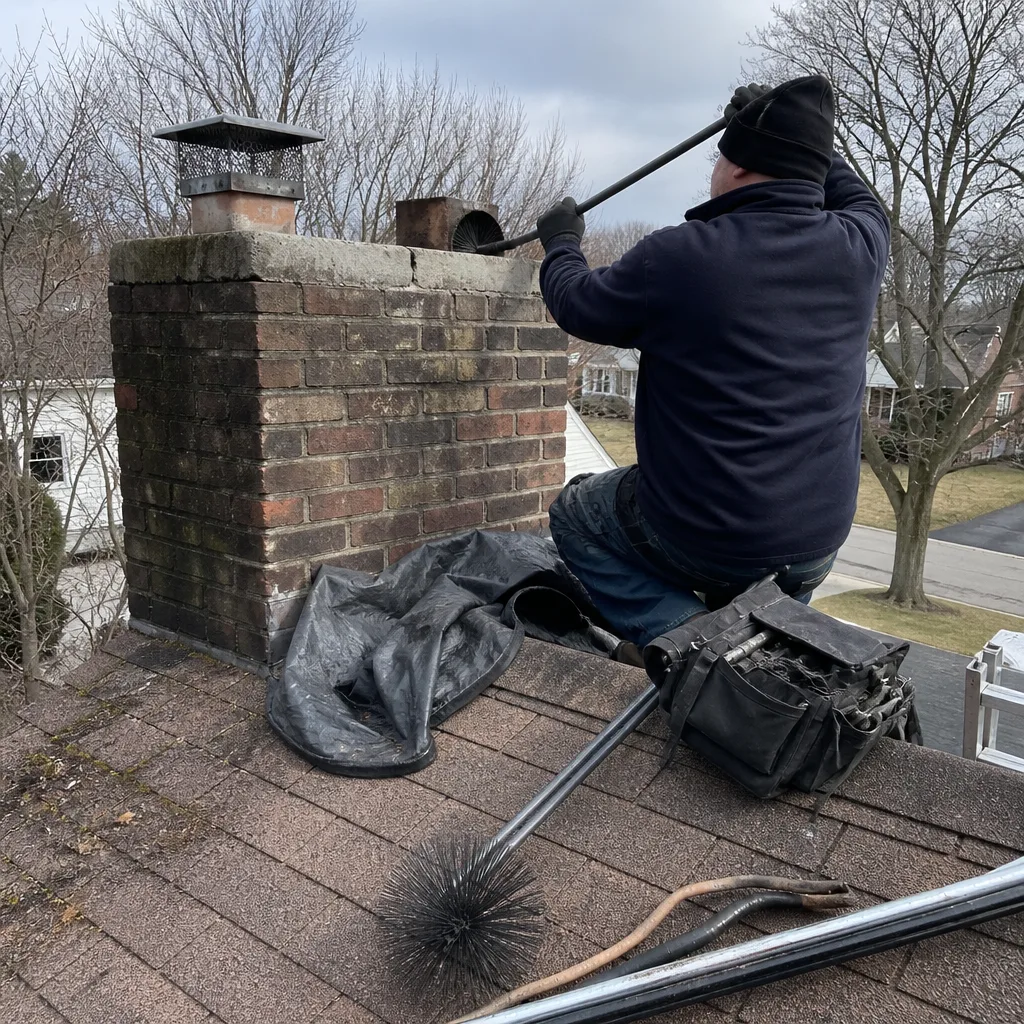 Before
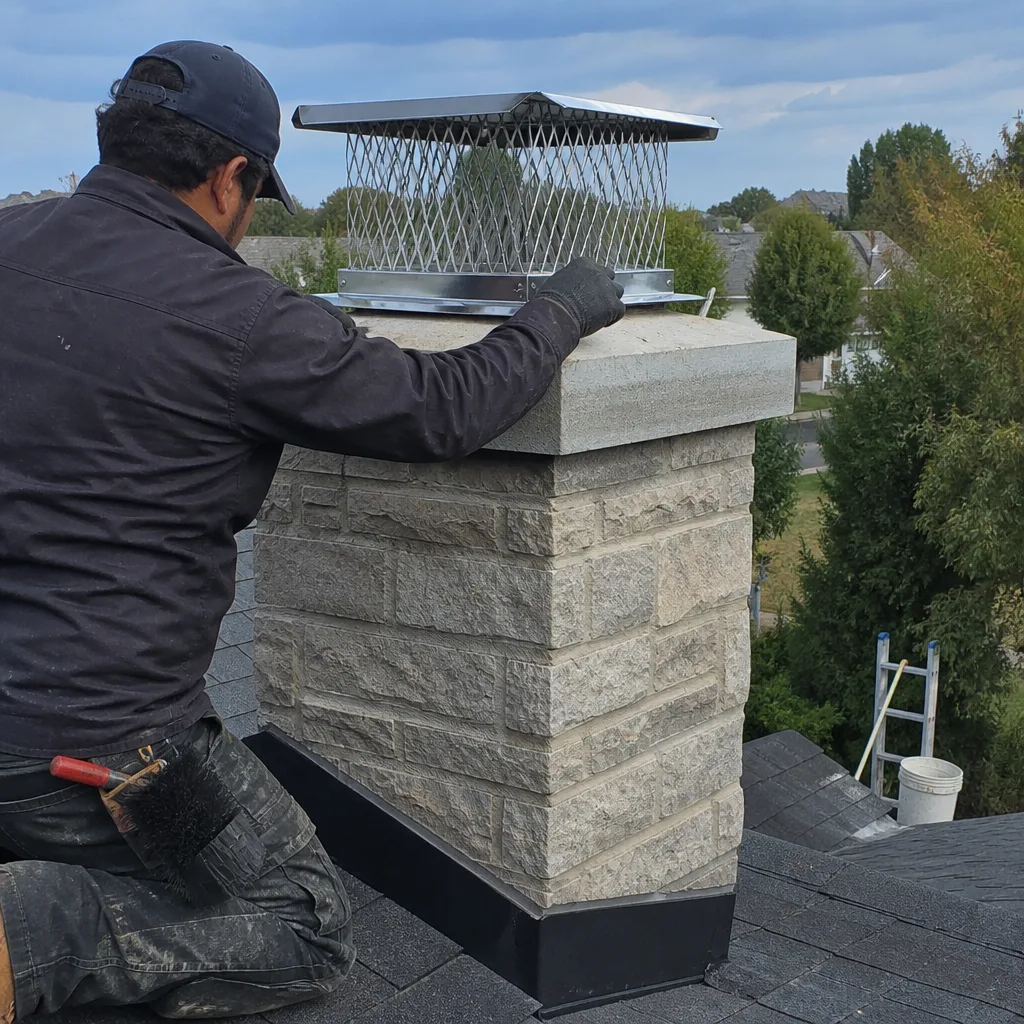 After
After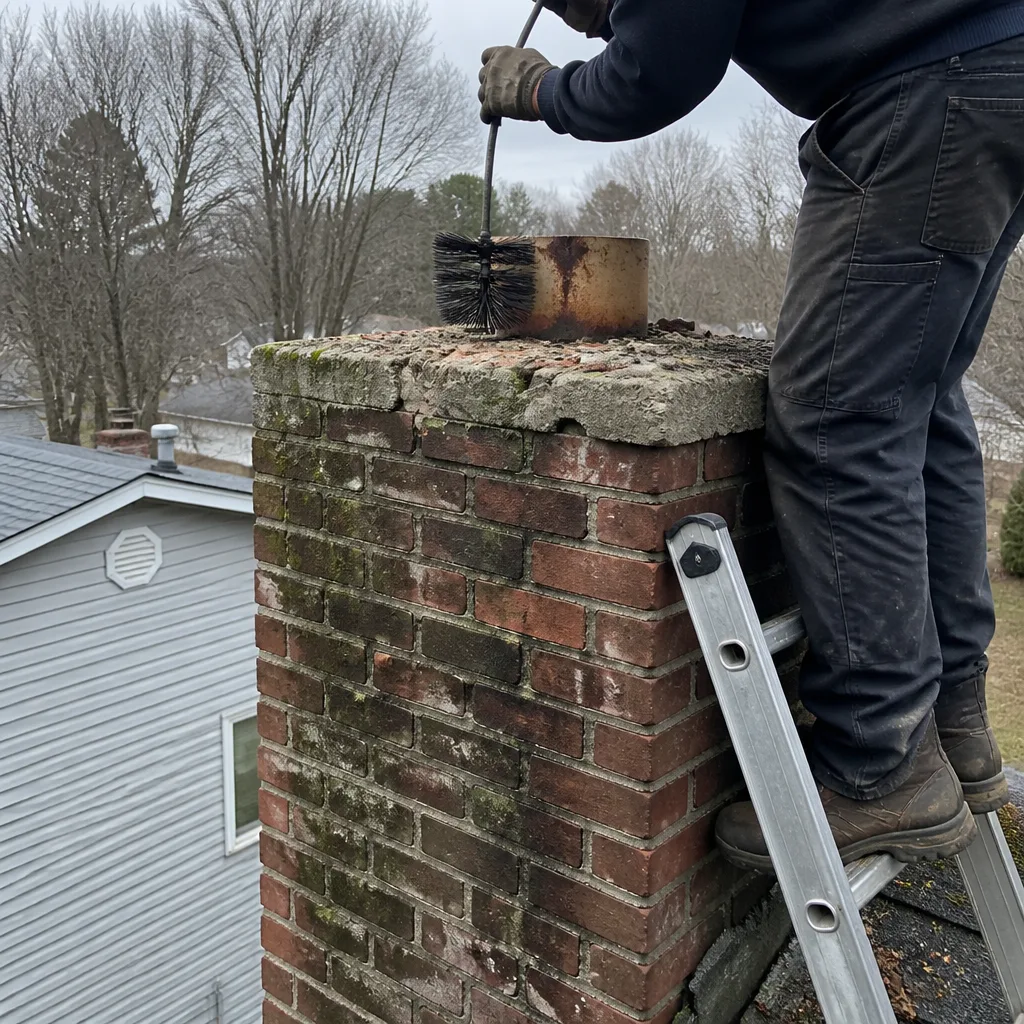 Before
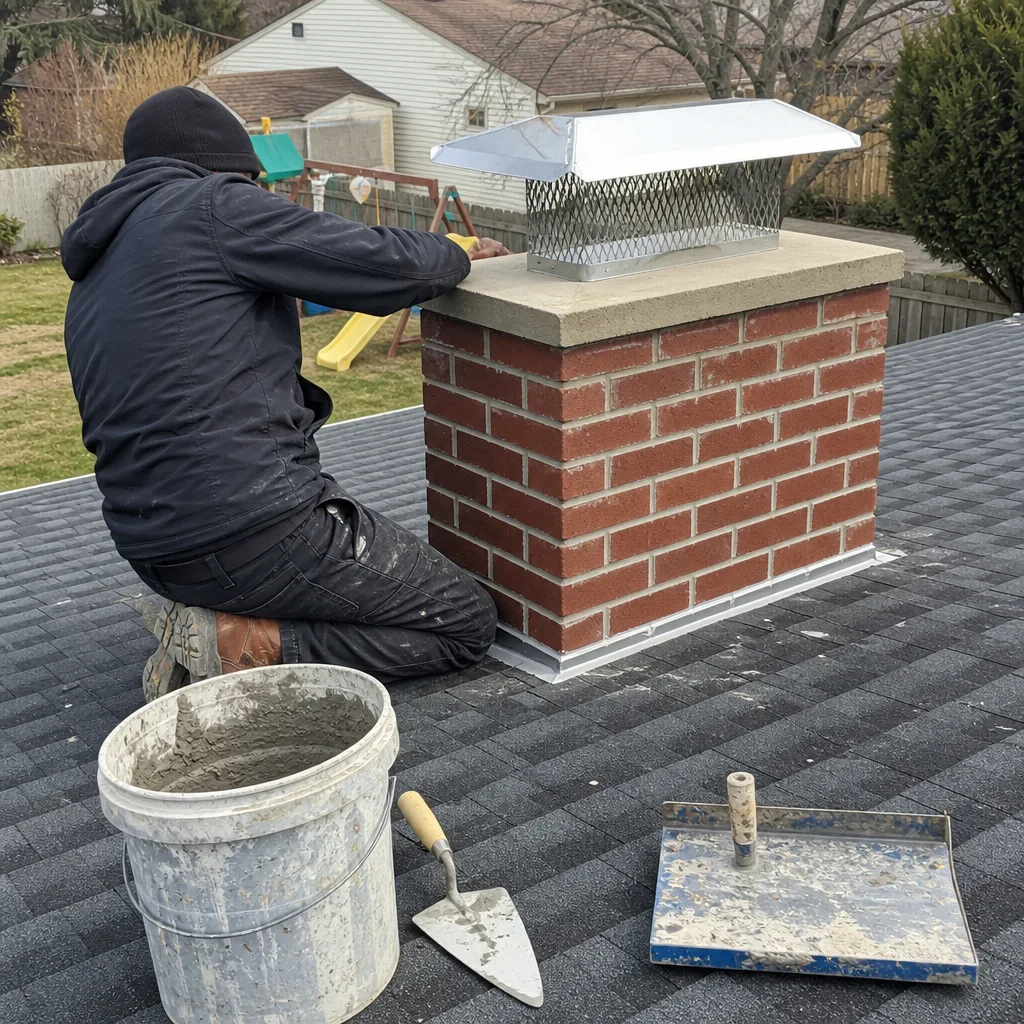 After
AfterHow to Hire a Chimney Cleaning Contractor in Plainview: A Step-by-Step Guide
New York State does not require a chimney sweep to hold any license. That means the person quoting your job tomorrow could have started the business last month. In Plainview, where most homes were built during the 1950s through 1980s and chimneys have seen decades of Long Island’s freeze-thaw cycles, hiring the cheapest or fastest-responding company is the single riskiest decision a homeowner can make. This guide gives you four concrete filters that screen out unqualified operators before they’re inside your home.
Quick Answer
To hire a chimney cleaning contractor in Plainview, verify CSIA certification independently on the CSIA website, confirm active liability insurance and workers’ compensation coverage in writing, demand a written itemized quote with line-item pricing, and ask for dated before-and-after photo documentation from recent local jobs. Skip any contractor who resists these four steps.
Table of Contents
- Why New York’s Lack of Licensing Changes Everything
- Step 1: Verify CSIA Certification Yourself
- Step 2: Confirm Real Insurance Coverage
- Step 3: Demand a Written, Itemized Quote
- Step 4: Evaluate Photo Documentation Like an Inspector
- What a Real Warranty Looks Like
- Red Flags That Should End the Conversation
- Plainview-Specific Considerations
- Common Mistakes to Avoid
- When to Call a Professional
- Frequently Asked Questions
- The Bottom Line
Why New York’s Lack of Licensing Changes Everything
Most homeowners assume the state checks credentials before someone can call themselves a chimney sweep. It does not. New York State has zero licensing requirement for chimney sweeps, zero continuing education mandate, and no state board to revoke a bad operator’s ability to work. The barrier to entry is a truck and a business card.
This matters in Plainview more than in newer developments. Homes here, from the split-levels near Manetto Hill Road to the colonials off Old Country Road, have masonry chimneys that have endured forty to seventy years of Long Island weather. Our freeze-thaw cycles are brutal. Water seeps into hairline cracks, expands when temperatures drop below 20 degrees, and opens those cracks into structural failures. A sweep who doesn’t understand masonry behavior in this climate can miss a crown separation that becomes a $4,000 rebuild.
We’ve been called to homes in Plainview where a previous “sweep” ran a brush up the flue, collected $150, and never noticed the deteriorated liner that was venting carbon monoxide into the bedroom wall. The homeowner found out during a chimney repair inspection we performed two years later. The damage was extensive by then.
Without state licensing, the burden of verification falls entirely on you. The four steps below are not paranoia. They are the minimum due diligence that separates a qualified professional from someone who watched a few videos and bought a brush set.
Step 1: Verify CSIA Certification Yourself
CSIA stands for Chimney Safety Institute of America. It is the only nationally recognized certification for chimney sweeps, and it requires passing a rigorous exam, adhering to a code of ethics, and completing continuing education every three years. A CSIA-certified sweep has demonstrated knowledge of fire codes, combustion science, and structural evaluation.
Here’s what most homeowners do wrong: they ask the contractor if they’re certified, accept a yes, and move on. The correct method takes thirty seconds and does not require trusting the contractor’s word.
- Go to csia.org and click “Find a Certified Professional.”
- Enter the sweep’s name or company name in the search field.
- Verify the certification status shows Active, not expired or lapsed.
- Note the certification number and the expiration date.
If the sweep is not listed, or the status shows anything other than active, that is definitive information. Do not accept explanations about “grandfathering” or “equivalent training.” CSIA certification is binary. You have it or you do not.
In our experience serving Plainview since 2014, roughly half the sweeps who advertise “certified” in Nassau County are not currently listed on the CSIA website. Some were certified years ago and let it lapse. Some attended a one-day seminar and claim equivalence. The CSIA search exposes both categories instantly.
At Hearthstone Chimney Co. home, our technicians maintain active CSIA certification and carry proof on every job. We encourage homeowners to verify it. A craftsman has nothing to hide.
Step 2: Confirm Real Insurance Coverage
Insurance is where one-truck operators and price-cutting chains most commonly cut corners. A legitimate chimney contractor carries two policies: general liability insurance and workers’ compensation insurance. Both must be active at the time of your job, not “usually carried” or “renewed annually.”
General liability protects your home if a technician damages your roof, drops equipment through a skylight, or causes a fire during service. Workers’ compensation protects you if a technician is injured on your property. Without workers’ comp, an injured worker can sue you as the homeowner. This is not theoretical. It happens.
Here’s how to verify coverage properly:
- Ask for a Certificate of Insurance (COI) mailed or emailed directly from the insurance broker, not a PDF from the contractor’s computer.
- Confirm the policy dates cover your scheduled appointment.
- Verify the certificate lists both general liability and workers’ compensation.
- Check that the coverage amounts are appropriate for residential work. We carry $2 million in general liability.
Be especially wary of the phrase “fully insured” without specifics. It means nothing. We’ve encountered operators in the Plainview area who carry only a general liability policy with a $300,000 limit, which evaporates quickly if a roof incident occurs. Others classify workers as “independent contractors” to avoid workers’ comp premiums, leaving you exposed.
If a contractor hesitates, delays, or suggests you are being unreasonable for asking, end the conversation. A professional expects this request and has the documentation ready.
Step 3: Demand a Written, Itemized Quote
Verbal quotes with round numbers are a red flag for three reasons. First, they cannot be compared to other bids. Second, they allow scope creep once work begins. Third, they indicate the contractor has not actually evaluated your specific chimney.
A proper written quote for chimney cleaning and inspection in Plainview should include:
- Line-item description of each service (sweeping, Level 1 or Level 2 inspection, camera evaluation)
- Specific materials to be used if repairs are recommended
- Labor breakdown separate from materials
- Total price with no vague “plus materials” language
- Expiration date of the quote
- Signature line for both parties
At Hearthstone Chimney Co., our Chimney Cleaning & Sweep in Plainview quotes specify whether we are performing a Level 1 visual inspection or a Level 2 internal camera inspection. They name the professional-grade materials we use if repairs are needed: DuraFlex for liner installations, HeatShield for crown and flue resurfacing, Gelco for cap replacements. You see the brand, the specification, and the price before any work begins.
Round numbers are a tell. A quote of “$300” or “$500 even” suggests the contractor is guessing based on what they think you’ll pay, not on actual scope. Real quotes end in irregular numbers because they reflect calculated labor hours, material costs, and permit fees.
The quote should also state what happens if additional problems are found during work. Our practice: we photograph the finding, stop work, and present options before proceeding. No surprises on the bill.
Step 4: Evaluate Photo Documentation Like an Inspector
Every chimney contractor now carries a smartphone and can show you photos. The question is whether those photos prove anything about your potential job, or merely prove they own a camera.
Before-and-after documentation should meet these standards:
- Dated and location-identified. Photos should show a timestamp and ideally a street address or neighborhood reference. “Last week in Plainview” is not sufficient.
- Consistent angle and lighting. True before-and-after shots are taken from the same position so you can compare directly. Random photos from different angles are marketing, not documentation.
- Close-up detail of the problem. A crack should be measured or scaled. A liner should show the specific damage pattern. Vague “dirty” and “clean” photos prove sweeping occurred, not diagnosis.
- Explanation of what was done and why. The photo should be paired with a written note explaining the finding, the recommended action, and the outcome.
We document every Fireplace Services in Plainview job with photos the homeowner can see and a plain-English verdict. In our Level 2 camera inspections, the homeowner watches the live feed as we navigate the flue. The photos are not after-the-fact selections. They are the actual evidence you use to decide whether work is necessary.
Ask to see documentation from a job similar to yours. A contractor who has worked in Plainview’s older homes should have examples of the specific issues common here: clay liner deterioration from decades of heating oil and gas combustion, crown cracking from freeze-thaw exposure, and creosote glazing from improperly seasoned wood burned in converted fireplaces.
If the contractor shows you glossy brochure photos with no dates, no addresses, and no technical notes, you are looking at marketing materials, not proof of competence.
What a Real Warranty Looks Like
A written guarantee or warranty is only as good as its language. Many contractors offer impressive-sounding promises that collapse under scrutiny. Here’s what to look for, and what to reject.
Good warranty language includes:
- Specific duration (90 days, one year, lifetime with conditions)
- Exact coverage (workmanship, materials, or both)
- Clear remedy (repair, replacement, or refund)
- No requirement for the homeowner to produce original paperwork
- No exclusion for “normal wear” that negates the entire promise
Bad warranty language includes:
- “Satisfaction guaranteed” with no definition of satisfaction or remedy
- Lifetime warranties from companies that have existed for two years
- Requirements to pay for “diagnostic visits” to evaluate a claim
- Exclusions for any issue “not directly caused by our work” (everything can be blamed on something else)
- Transfer restrictions that void coverage if you sell the home
Our 90-Day Done Right Promise is governed by the K.E.Y.S. values code: Krafted right, Every time, Your home first, Standing behind it. If it’s not done right, we make it right. Backed in writing with no paperwork and no arguing. We’ve honored this promise across hundreds of jobs in Plainview and Nassau County since Russell Haines founded Hearthstone Chimney Co. in 1984.
A warranty from a company with no local history is a gamble. A warranty from a company that has served Plainview for over 42 years is a commitment you can verify by asking neighbors.
Red Flags That Should End the Conversation
Some warning signs are definitive. If you encounter any of the following during your hiring process, eliminate that contractor from consideration immediately.
- Pressure to decide today. Legitimate chimney work is not urgent in the way a burst pipe is. Seasonal timing matters, but any contractor who claims your discount expires tonight is selling, not serving.
- Cash-only pricing with a “discount.” This is tax evasion and leaves you with no payment record if work fails.
- No physical address or a PO box as the business location. A chimney contractor without a real shop or office has no fixed presence to hold accountable.
- Refusal to put scope in writing. Verbal agreements are unenforceable and indicate the contractor intends flexibility you will not like.
- Quotes significantly below other bids. In the Plainview market, a proper chimney sweep with Level 2 inspection typically runs $200-$350. A $99 “special” omits the inspection entirely or sends an unqualified technician.
- No local references from the past year. Testimonials from 2019 or “satisfied customers nationwide” are not relevant to your job.
- Technician arrives in an unmarked vehicle without uniform or ID. Professional contractors invest in accountability. Fly-by-night operators do not.
Plainview-Specific Considerations
Plainview’s housing stock creates specific chimney risks that a qualified contractor should recognize without prompting.
Homes built in the 1950s through 1970s, common in the South Plainview and East Plainview sections, often have unlined chimneys or clay tile liners that have degraded from decades of oil burner exhaust. The sulfur in heating oil combines with moisture to form sulfuric acid, which eats clay from the inside out. A sweep who only looks for creosote and ignores liner condition is missing the primary hazard.
Homes near the Plainview-Old Bethpage border, particularly those with original masonry fireplaces, frequently have crown damage from ice damming and freeze-thaw cycling. Nassau County’s temperature swings, with January nights below 15 degrees and March days near 50, accelerate masonry deterioration. A proper inspection evaluates crown slope, sealant condition, and water intrusion paths.
Local code enforcement in the Town of Oyster Bay requires permits for chimney liner replacement and structural rebuilds. A contractor who suggests “no permit needed” for liner work is either ignorant or dishonest. We pull permits for all regulated work and schedule inspections with the Town as required, following Chimney Cleaning Permits, Codes & Inspections in NY: What You Need to Know.
Wood-burning fireplace usage in Plainview has increased since 2020, particularly in the Manetto Hill and Karen Drive areas where homeowners have renovated original fireplaces. New inserts require proper sizing and connection to existing flues. An unqualified installer can create drafting problems that fill your home with smoke or carbon monoxide.
Common Mistakes to Avoid
- Hiring based on the lowest quote alone. In chimney work, the lowest bid typically omits inspection depth, uses inferior materials, or carries hidden costs that appear after work begins. The $150 sweep that misses a cracked liner costs you thousands later.
- Assuming a clean chimney is a safe chimney. Sweeping removes combustible deposits. It does not evaluate structural integrity, liner condition, or proper clearances. A sweep without inspection is incomplete.
- Trusting online reviews without verification. Review platforms are gamed. Ask for three local references from the past six months and call them. Ask specifically: “Did they find problems other sweeps missed?” and “Did the final price match the quote?”
- Skipping the insurance check because the contractor “seems nice.” Personality is not a credential. We’ve met charming operators in Plainview who carried no workers’ comp and sent uninsured day laborers onto roofs.
- Accepting “the liner is fine” without camera evidence. Clay liner deterioration is not visible from the firebox. Demand internal camera documentation or schedule a Level 2 inspection.
- Waiting until October to schedule. Qualified Plainview chimney contractors book solid by mid-September. Schedule in spring or summer for fall readiness. We answer calls 24/7 year-round, but appointment availability shrinks as temperatures drop.
- Neglecting to ask about cleanup protection. Chimney sweeping is dirty work. Confirm the contractor uses drop cloths, HEPA filtration, and shoe covers. We leave homes cleaner than we found them.
When to Call a Professional
Call a qualified chimney contractor immediately if you notice any of the following: visible cracks in the exterior masonry, white efflorescence staining on the chimney face, smoke entering your home during fireplace use, a strong odor from the fireplace in warm weather, or any suspicion of carbon monoxide symptoms (headache, nausea, dizziness) when heating systems operate. These are not maintenance items. They are safety concerns.
Even without symptoms, the National Fire Protection Association recommends annual inspection of all chimneys, fireplaces, and vents. In Plainview’s climate, with heavy heating system use from November through April and humidity-driven moisture intrusion in summer, annual evaluation is Seasonal Chimney Cleaning Care for Plainview: Year-Round Homeowner’s Guide level maintenance, not overcaution.
Hearthstone Chimney Co. offers free estimates in Plainview. Call (934) 348-4832 to speak with a live person, any hour, any day. We’ll schedule a Level 2 camera inspection, show you what we find, and give you a written quote with no pressure to proceed. Done right, and we stand behind it.
Frequently Asked Questions
A professional chimney sweep with Level 1 inspection in Plainview typically costs $150-$250, while a Level 2 inspection with internal camera evaluation runs $250-$400 depending on chimney height and accessibility. For a full Chimney Cleaning Cost Breakdown: The Plainview Homeowner’s Reference for 2026, see our guide. Prices below this range usually indicate omitted services, unqualified labor, or hidden add-ons. Call (934) 348-4832 for an exact quote on your specific chimney - estimates are free.
You need a new liner when the existing one is cracked, deteriorated, or improperly sized for your heating appliance, which we determine through Level 2 camera inspection and document with photos you can see. In Plainview’s older homes with original clay liners, acid degradation from decades of oil or gas exhaust is common. We never recommend liner replacement without camera evidence, and we explain when work can safely wait versus when it cannot.
The National Fire Protection Association recommends annual inspection for all chimneys, with sweeping frequency determined by use: wood-burning fireplaces need sweeping when creosote reaches 1/8 inch thickness, typically annually with regular use; gas and oil systems need inspection for liner and vent integrity yearly, with sweeping as needed based on debris or deterioration. Plainview’s heating season runs long, and our freeze-thaw climate accelerates masonry wear, so annual evaluation is particularly important here.
Skipped maintenance leads to creosote accumulation that can ignite into chimney fires reaching 2,000 degrees, cracked liners that vent carbon monoxide into living spaces, and water intrusion that destroys masonry from the inside out. In Plainview, we’ve rebuilt chimneys that could have been preserved with timely crown sealing and liner repair. The cost of prevention is always lower than the cost of remediation. Call (934) 348-4832 to schedule before problems develop.
Visit csia.org, click “Find a Certified Professional,” and search by the sweep’s name or company name to confirm active status and expiration date. The process takes under a minute and does not require contacting the contractor. If the search returns no results or shows a lapsed certification, the sweep is not currently qualified regardless of what they claim.
A Level 1 inspection is a visual examination of accessible portions of the chimney, appropriate for annual maintenance when no changes have been made to the system. A Level 2 inspection adds internal camera evaluation of the flue, inspection of attics and crawl spaces, and assessment of clearances, required when buying or selling a home, after a chimney fire, or when changing appliance type. In Plainview’s older homes with unknown maintenance history, we typically recommend Level 2 for first-time clients.
The Bottom Line
Hiring a chimney cleaning contractor in Plainview requires active verification because New York State requires none. The four filters, verify CSIA certification independently, confirm insurance directly with the broker, demand written itemized quotes, and evaluate photo documentation critically, separate qualified professionals from operators who should not enter your home. Apply them without exception, and you will avoid the most common and costly mistakes homeowners make. For more guides & resources, visit our blog.
The chimney contractor you choose should welcome this scrutiny. A craftsman has nothing to hide and everything to prove. At Hearthstone Chimney Co., we have served Plainview and Nassau County for over 42 years with background-checked, uniformed technicians, professional-grade materials from brands like Copperfield and DuraFlex, and the 90-Day Done Right Promise in writing. A square deal, no surprises on the bill, and we’ll be there when we say.
Written by Russell Haines, Owner at Hearthstone Chimney Co., serving Plainview since 2014.