
Level 1 sweep and inspection to the NFPA 211 annual standard - flue, crown, cap, and flashing checked and photographed
Chimney sweep logs do not sweep chimneys. They loosen some creosote - which then falls where a brush and vacuum still have to collect it.
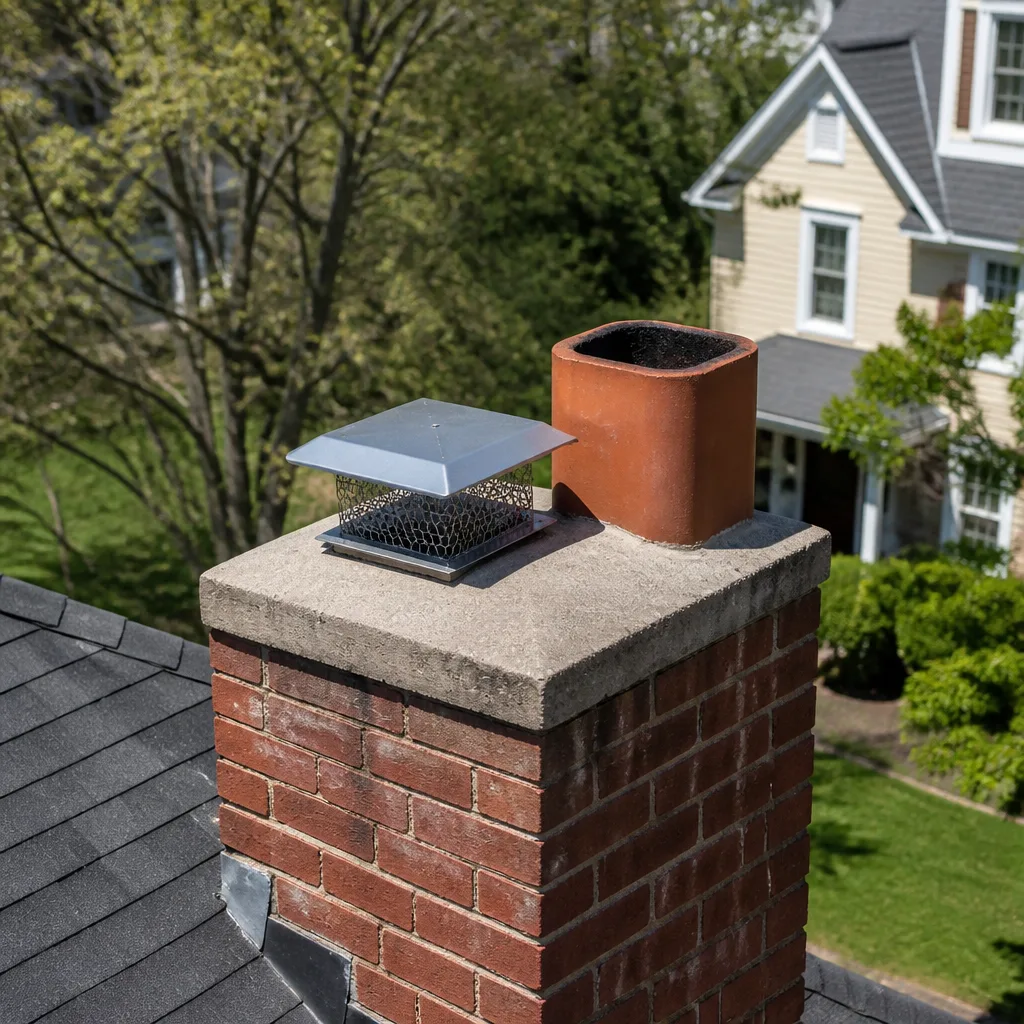
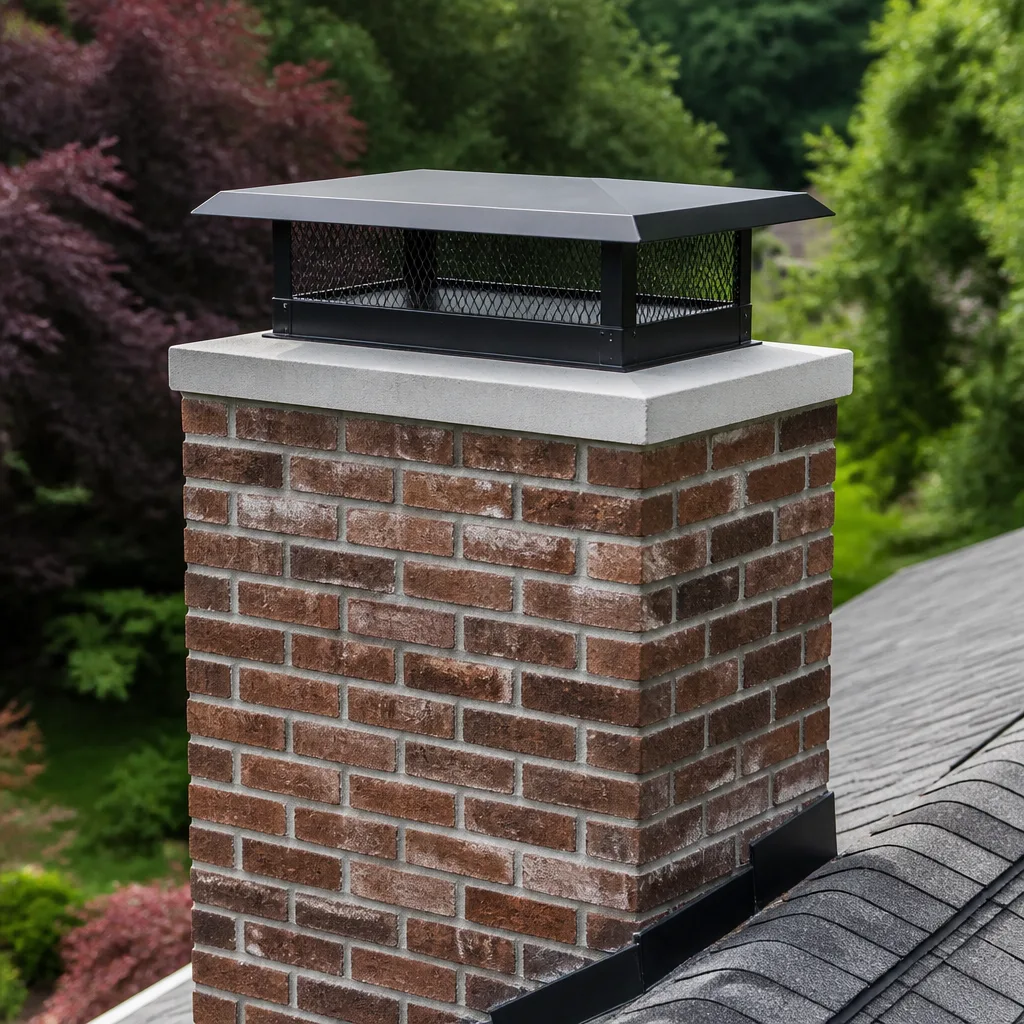
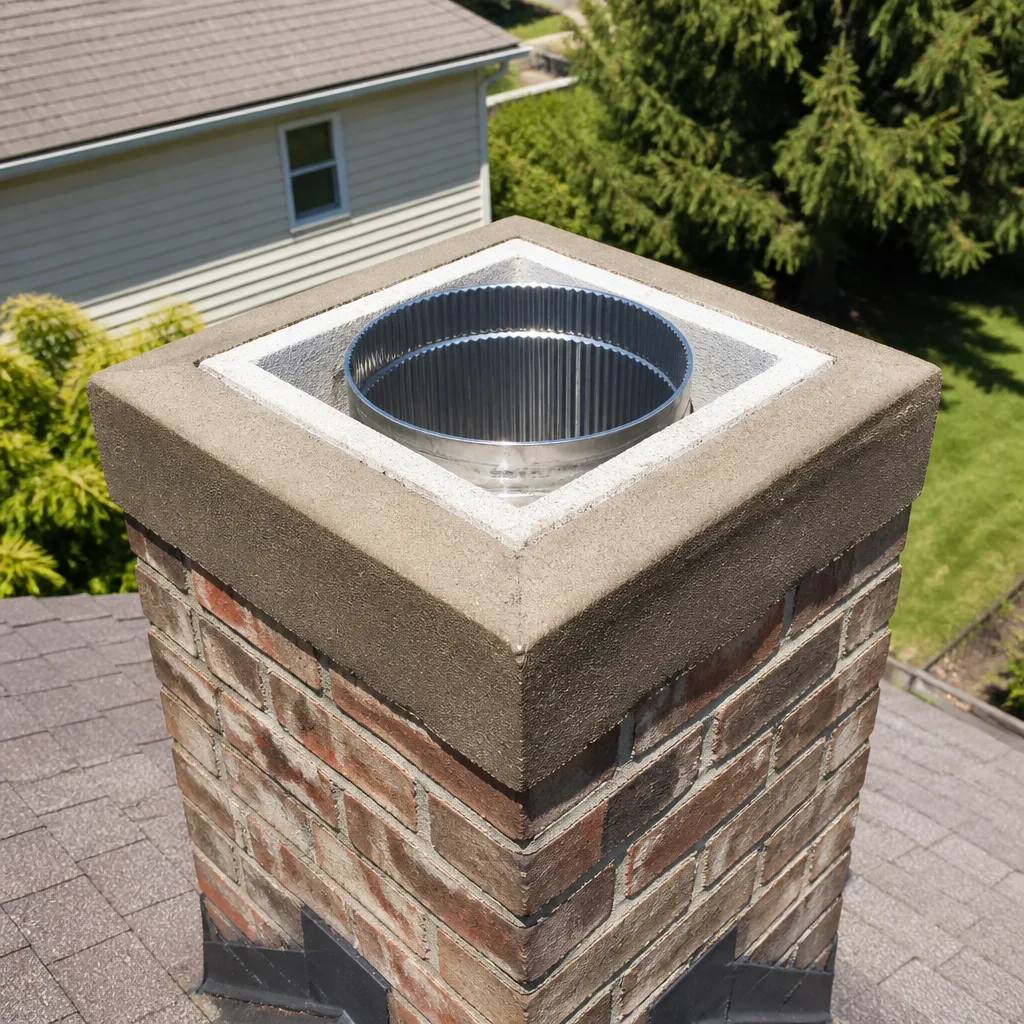
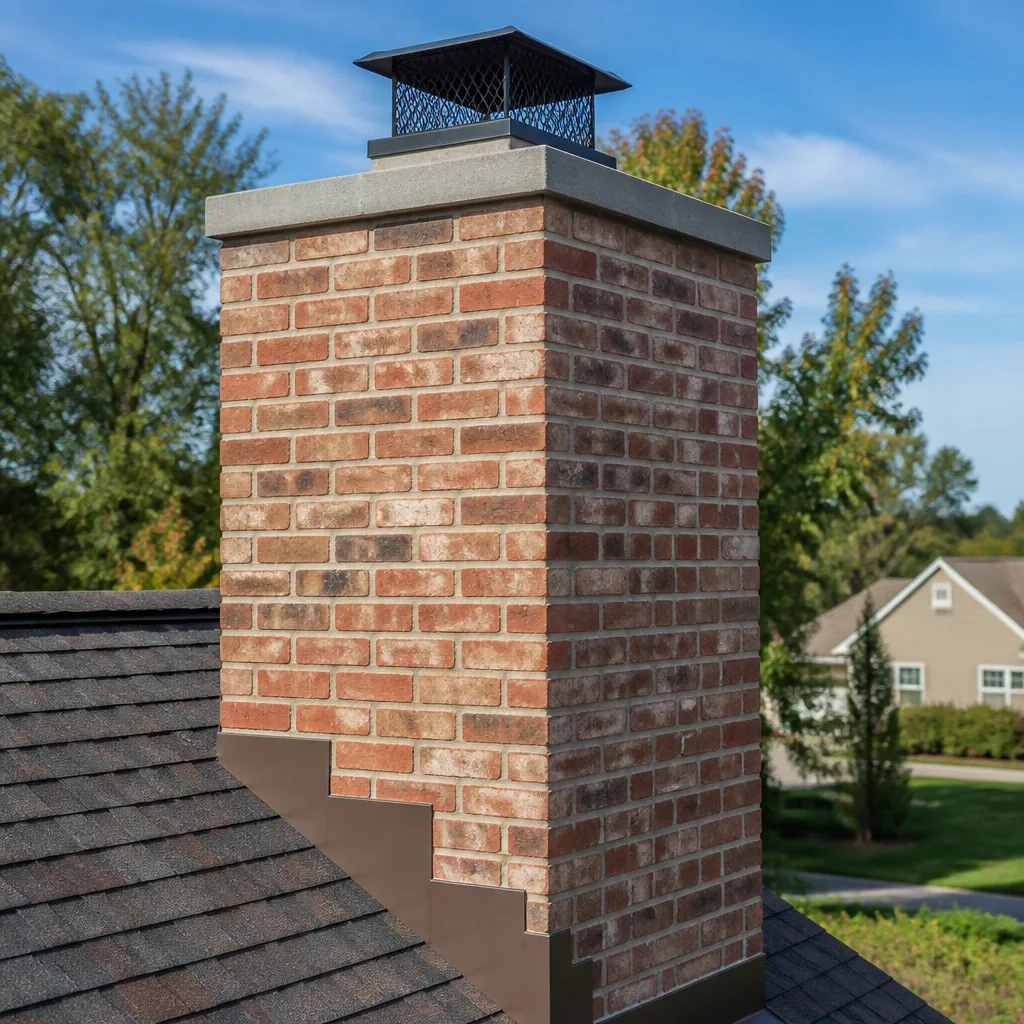
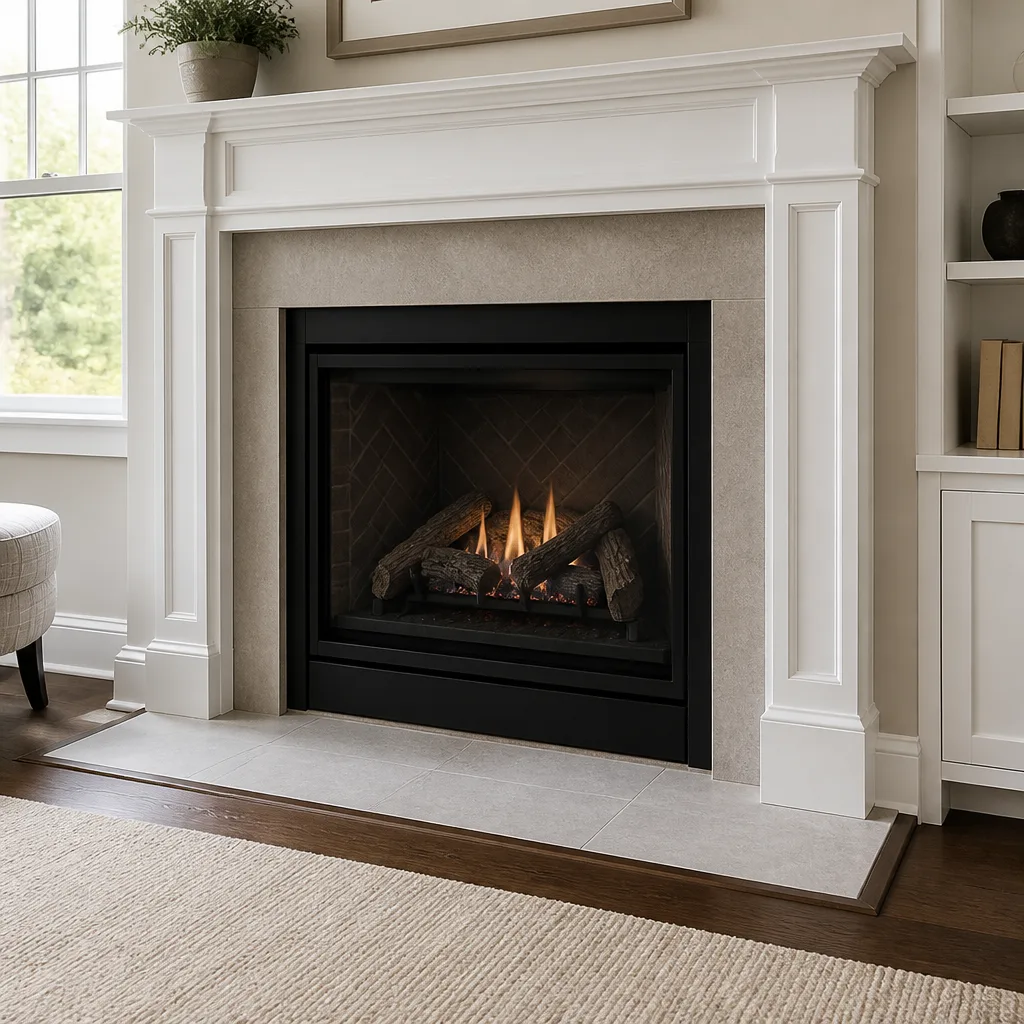
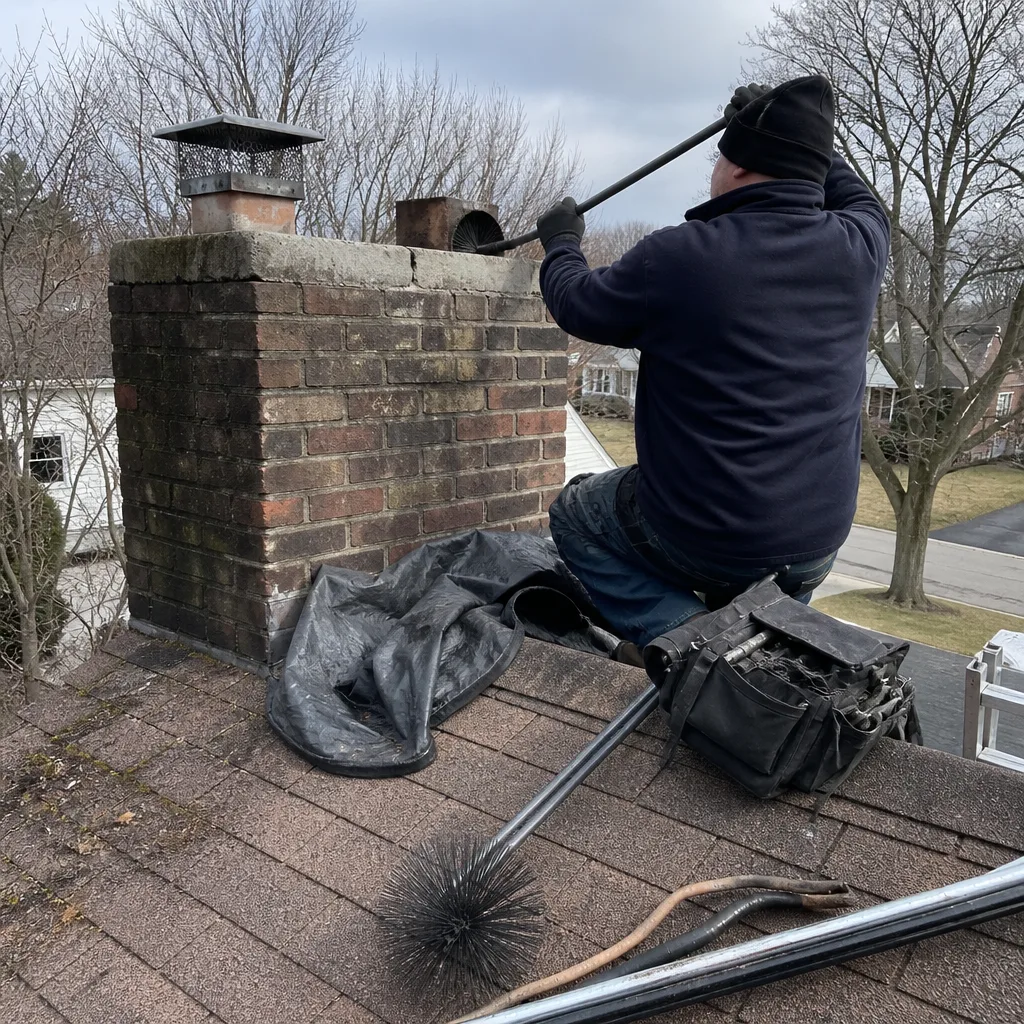 Before
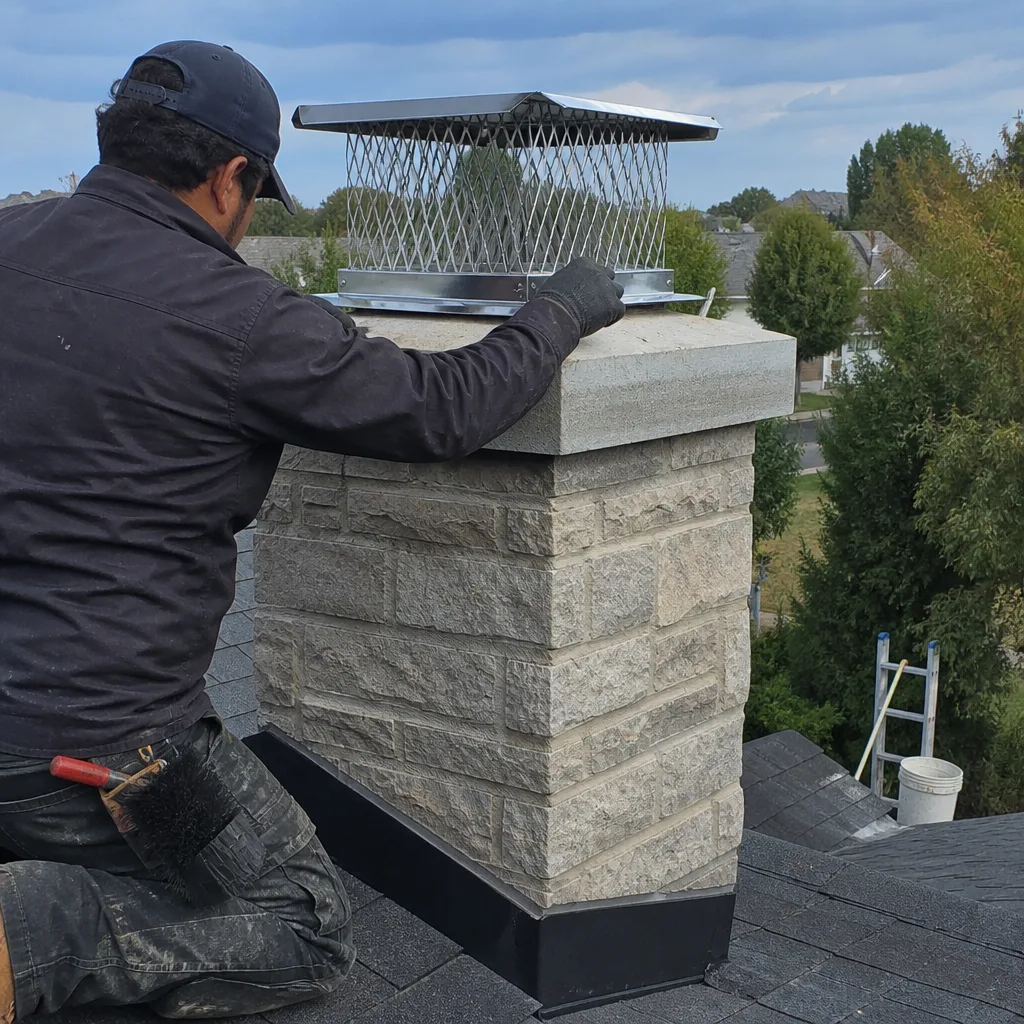 After
After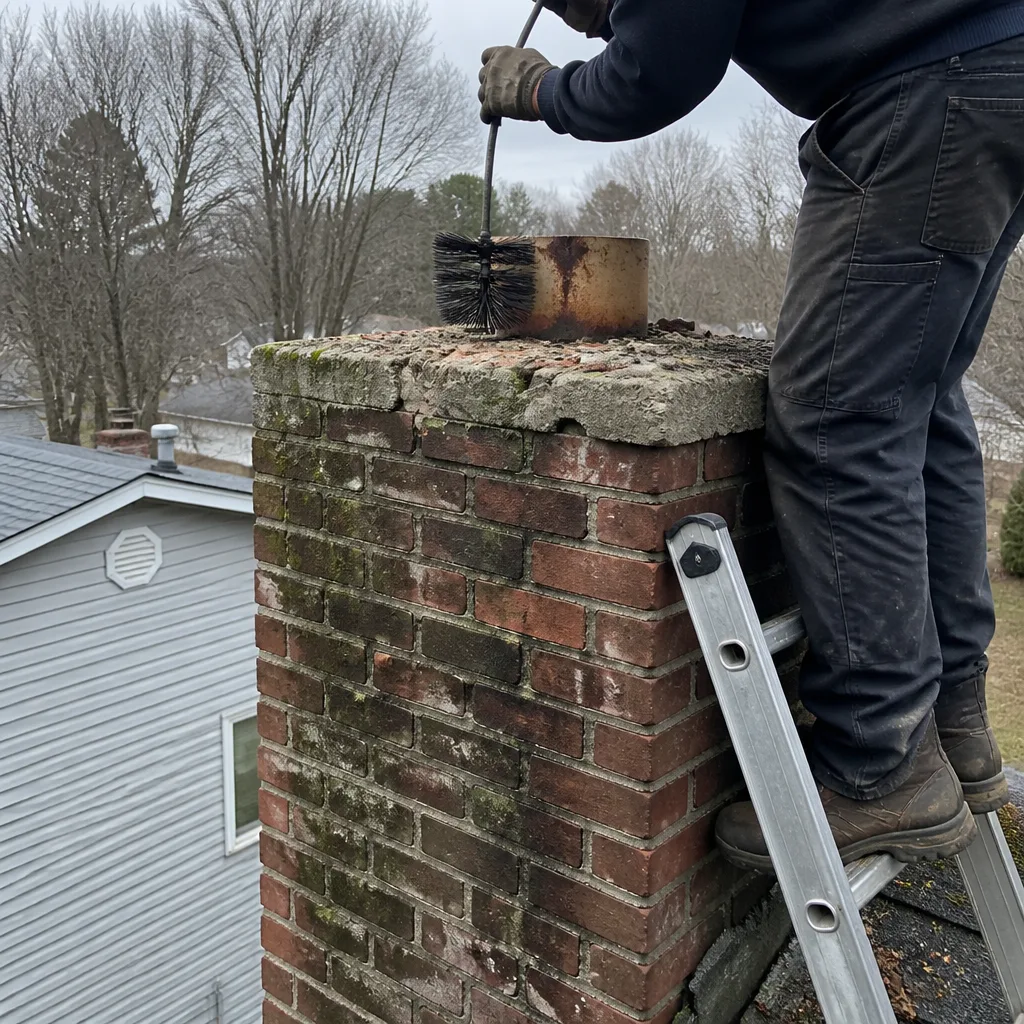 Before
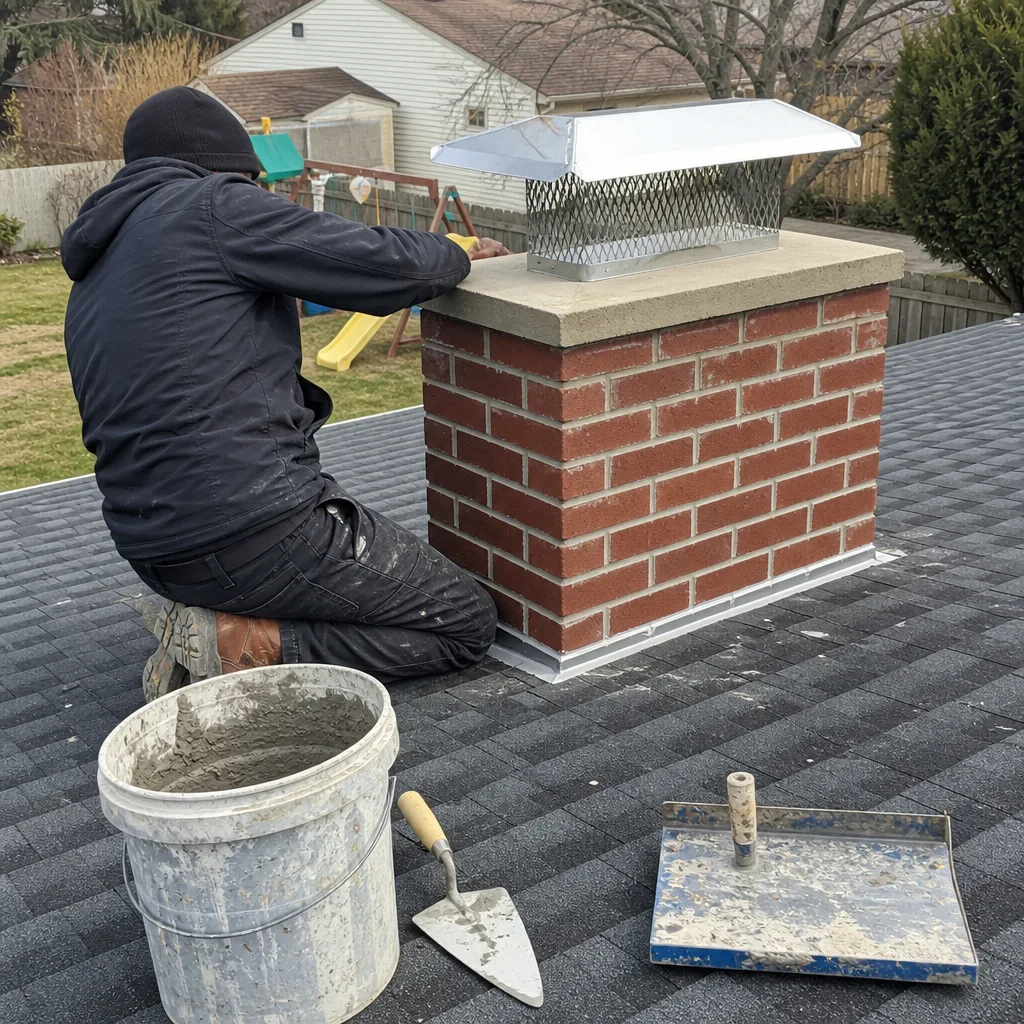 After
AfterCreosote Removal in Plainview, NY
Our Chimney Cleaning & Sweep services remove the hardened, flammable residue that wood combustion deposits on the inside walls of your chimney flue. In Plainview, where most homes on the older streets of Birchwood and Manetto Hills were built with fireplaces designed for frequent use, a single heating season can leave enough buildup to create a serious fire risk. If you’re seeing black, tar-like deposits when you look up the flue, smelling something acrid after a fire, or noticing your fires don’t draw the way they used to, the chimney is telling you something worth hearing.
At Hearthstone Chimney Co., we’ve been removing creosote from Plainview chimneys since 1984 – over 42 years of work that has shown us every stage of buildup, from the dusty first-degree variety to the glazed, rock-hard third-degree deposits that require chemical treatment before a brush can touch them. Russell Haines built this company on the principle that the job gets documented, explained in plain English, and backed in writing. That hasn’t changed. Call us at (934) 348-4832 – a live person answers every hour of every day.
Creosote removal is part of what we do under our broader Chimney Cleaning & Sweep in Plainview service, and most jobs are completed in a single visit with upfront pricing – the number on the estimate is the number on the invoice, nothing more.
When You Need Creosote Removal
Creosote doesn’t announce itself. It accumulates quietly over months of fires and then, when conditions are right, it burns at temperatures above 2,000 degrees Fahrenheit – far beyond what most older Plainview flue liners were built to survive. Here are the clearest signs that removal should happen before your next fire.
- Black, oily deposits visible inside the firebox or on the damper. If you can see dark, sticky or shiny residue around the damper plate or on the firebox walls, there’s almost certainly heavier buildup higher up the flue where you can’t see it without a camera.
- A persistent smoky or tar-like odor when the fireplace isn’t in use. In Plainview’s humid summers, creosote absorbs moisture and intensifies the smell – homeowners often notice it first in July, months after the last fire.
- Smoke backing into the room during a fire. Heavy creosote reduces the interior diameter of the flue, restricting airflow. What feels like a draft problem is often a buildup problem.
- Fires that are harder to start or don’t burn as hot as they used to. Restricted airflow from creosote accumulation starves fires of oxygen, especially in the older masonry chimneys common in Plainview’s mid-century ranch and colonial homes.
- More than one full heating season since the last professional cleaning. The Chimney Safety Institute of America recommends annual inspections and cleaning as needed. One cord of wood burned over a Plainview winter is typically enough to warrant a cleaning.
- Any sign of a previous chimney fire – popping sounds, dense smoke, or visible damage to the flue. A chimney fire can bake soft creosote into the glazed, honeycomb-textured third-degree form that doesn’t brush out and requires chemical treatment before any other repair can proceed.
Our Creosote Removal Process
Every job starts with a Level 1 Inspection: we look at what’s actually there before we touch anything. That’s not a formality – it’s how you avoid doing the wrong job on the wrong problem. Here is how a standard creosote removal appointment goes at Hearthstone Chimney Co.
- Pre-job camera inspection. Before any brushes come out, our technician runs a Level 2 camera inspection of the full flue from the firebox to the cap. You see the footage. We explain what we’re looking at, in plain English. This tells us exactly what degree of creosote we’re dealing with and whether there’s any underlying damage – cracked tiles, spalling mortar, liner gaps – that the creosote may have concealed or caused.
- Protection of your home’s interior. Drop cloths go down on the hearth and surrounding floor. The fireplace opening is sealed with a tight-fitting dust barrier before any brushing begins. Chimneys in Plainview’s older homes often have wider fireboxes that require custom sizing – we bring what fits, not a one-size solution.
- Mechanical removal – rotary brush cleaning. For first-degree (dry, flaky) and most second-degree (crunchy, hardened) creosote, we use professional-grade rotary brush systems from Olympia Chimney – tools built for the trade, not the hardware store. Brushes are sized to the flue’s exact dimensions, which is why the camera inspection comes first.
- Chemical treatment when needed. Third-degree glazed creosote – the kind that looks like black glass or a melted, porous mass – won’t yield to a brush alone. We apply a professional-grade chemical modifier that changes the molecular structure of the deposit, making it brittle enough to be removed mechanically on a follow-up visit. We don’t pretend a single treatment dissolves it; that’s not how the chemistry works, and any company that tells you otherwise is overpromising.
- Debris removal and cleanup. All creosote debris is collected and removed from your property. The firebox, damper, and surrounding hearth area are cleaned and left the way we found them – or better.
- Post-removal inspection and written documentation. The camera goes back up. You see the before and after. We give you a plain-English verdict on the current condition of the flue: whether it’s safe to use, whether repairs are recommended, and what the timeline looks like. Everything is written down. That’s the 90-Day Done Right Promise – in writing, no arguing, no paperwork maze.
Creosote Removal Pricing in Plainview
Creosote removal in Plainview typically runs between $189 and $549 for a standard residential chimney, depending on the degree of buildup, the height and configuration of the flue, and whether chemical treatment is required. That range is honest – it’s not a teaser low number to get us in the door. Here’s what drives cost up or down.
| Situation | Typical Price Range |
|---|---|
| Standard cleaning, first-degree creosote (single flue) | $189 – $249 |
| Second-degree creosote, moderate buildup | $249 – $349 |
| Third-degree glazed creosote, chemical treatment required | $349 – $549 |
| Multi-flue systems (common in Plainview colonials with multiple fireplaces) | Priced per flue – ask for a combined estimate |
A few things worth knowing about how we price the work. First, the estimate you receive before we start is the price you pay when we finish – no additions at the end because we found something we claim we didn’t expect. Second, any repair over $250 qualifies for $50 Off with our current offer. Third, if you’ve already received a written estimate from another company, we’ll give you a free second opinion – no charge, no obligation. And our permanent 5% Senior and Veteran discount applies to all services, including creosote removal.
For an accurate number on your specific chimney, call (934) 348-4832. Estimates are free, and a live person will answer.
Why Plainview Chimneys Build Creosote Faster Than You’d Expect
This is something we see enough in Plainview to be worth explaining plainly. Long Island’s climate sits at an awkward middle point: winters are cold enough that homeowners burn wood regularly, but not so cold that fires burn consistently hot. A fire that burns cool and slow – the kind you’d set on a mild November evening – produces significantly more creosote than a hot, high-draft fire. The physics are simple: unburned wood gases condense on cooler flue walls rather than exiting the chimney as vapor.
Older homes in neighborhoods like Manetto Hills and the areas near Plainview-Old Bethpage Road were built before factory-built fireplaces became common. Those traditional masonry fireplaces, while well-constructed, tend to have larger flue openings relative to firebox volume – which can reduce draft velocity and allow more condensation, making Fireplace Cleaning especially important. Add in the fact that many Plainview homeowners use their fireplaces as a supplement to central heating rather than a primary heat source (meaning shorter, less intense fires), and you have the conditions for faster-than-average creosote accumulation.
We also see more third-degree glazed deposits in homes that burned manufactured logs frequently over the years. Some of those logs leave a waxier residue that contributes to glazing. None of this is a character flaw – it’s just what the chimneys here do, and it’s why annual cleaning matters more in this region than homeowners often realize.
The Safety Case – Briefly and Honestly
A chimney fire fed by heavy creosote can reach temperatures that crack terra-cotta flue tile, warp dampers, and – in the worst cases – transfer heat through masonry to adjacent wood framing. We don’t say this to alarm anyone. We say it because it’s accurate, and because the homeowners we work with in Plainview are adults who deserve a straight answer rather than a vague warning designed to sell something.
Creosote removal is not a DIY job. The tools required to reach and clean a full flue properly – rotary systems, industrial vacuums with HEPA filtration, camera equipment – aren’t available at a hardware store, and the chemical modifiers used on third-degree deposits require training to apply safely. More practically, the person doing the work needs to be able to see what’s actually up the flue before deciding how to treat it. A brush run through an unknown flue can dislodge debris that reveals a cracked liner, or push material into a blockage that makes things worse. Let a trained technician handle it. That’s what we’re here for.
What Comes After Creosote Removal
Once the flue is clean, a Level 2 Inspection with a camera tells us whether anything else needs attention. In Plainview homes built in the 1960s and 1970s, we frequently find that the clay tile liner has developed stress fractures – sometimes caused by a previous undetected chimney fire, sometimes just age and thermal cycling. If the liner needs work, we carry HeatShield resurfacing systems for flues where the tile is sound but the joints have deteriorated, and we install Gelco-grade stainless liner systems where a full reline is the better call.
We also inspect the chimney cap and crown at the same time. A damaged or missing crown allows water into the masonry and accelerates the very conditions that produce creosote problems faster. Catching it after a cleaning – when the flue is fully accessible and documented – saves a second service call. Most jobs in Plainview wrap up in a single visit for exactly this reason: we arrive prepared to handle what the inspection finds.
If you’re starting from scratch and want to understand the full scope of what annual chimney care involves, our home page covers the complete range of services we provide and how the 90-Day Done Right Promise applies across all of them.
Key Takeaways
- Creosote removal in Plainview typically costs $189 to $549 depending on the degree of buildup and whether chemical treatment is needed.
- Hearthstone Chimney Co. has served Plainview since 1984 – over 42 years of documented work on Long Island chimneys.
- Every job begins with a Level 2 camera inspection so you see the condition of your flue before work starts, not just after.
- Third-degree glazed creosote requires chemical modification before it can be removed – any company promising a one-visit brush-out of glazed deposits is overstating what brushes can do.
- All work is covered by the 90-Day Done Right Promise – in writing, no arguing, no calling around for callbacks.
- A live person answers the phone at (934) 348-4832 every hour of every day, including weekends and holidays.
- Senior and Veteran discount of 5% applies to all services. Repairs over $250 qualify for $50 off.
FAQs – Creosote Removal
How much does creosote removal cost in Plainview, NY?
Creosote removal in Plainview runs $189 to $549 for most residential chimneys, with the final number depending on the degree of buildup – first-degree dry deposits are at the lower end, while third-degree glazed creosote that requires chemical treatment is at the higher end. Multi-flue homes, which are common in Plainview’s larger colonial-style houses, are priced per flue. The estimate you receive before work begins is the price you pay when it’s done. Call (934) 348-4832 for a free estimate specific to your chimney.
How many heating seasons can I go before creosote becomes dangerous?
There’s no universal answer, because buildup rate depends on how you burn, what you burn, and how your flue is configured – but a single full heating season of regular use is typically enough to warrant cleaning. In Plainview, where mild fall temperatures lead many homeowners to burn cool, low-draft fires early in the season, we see meaningful buildup after just one winter. Annual inspection and cleaning is the practical standard, and it’s what we recommend without qualification.
Can you remove third-degree glazed creosote in a single visit?
Third-degree glazed creosote almost always requires two visits: a first visit to apply a chemical modifier that makes the deposits brittle, and a follow-up visit – typically a few weeks later – to mechanically remove the treated material. Anyone telling you a single brush-out handles glazed creosote is describing a different problem than the one you have. We explain this upfront so there are no surprises and no second invoice you weren’t prepared for.
Is creosote removal something a homeowner can do themselves?
The short answer is no, not safely or effectively. Properly cleaning a full flue requires rotary brush systems sized to the exact flue dimensions, industrial vacuum equipment to contain the debris, and a camera inspection to confirm what’s present before work begins and verify the result afterward. Beyond the equipment, the real risk is doing mechanical work on a flue without first confirming the liner is intact – a cracked liner changes the job entirely. This is one of those areas where the cost of professional service is low relative to the cost of getting it wrong. Call us at (934) 348-4832 and we’ll tell you plainly what your chimney needs.
Written by Russell Haines, Owner at Hearthstone Chimney Co., serving Plainview.