
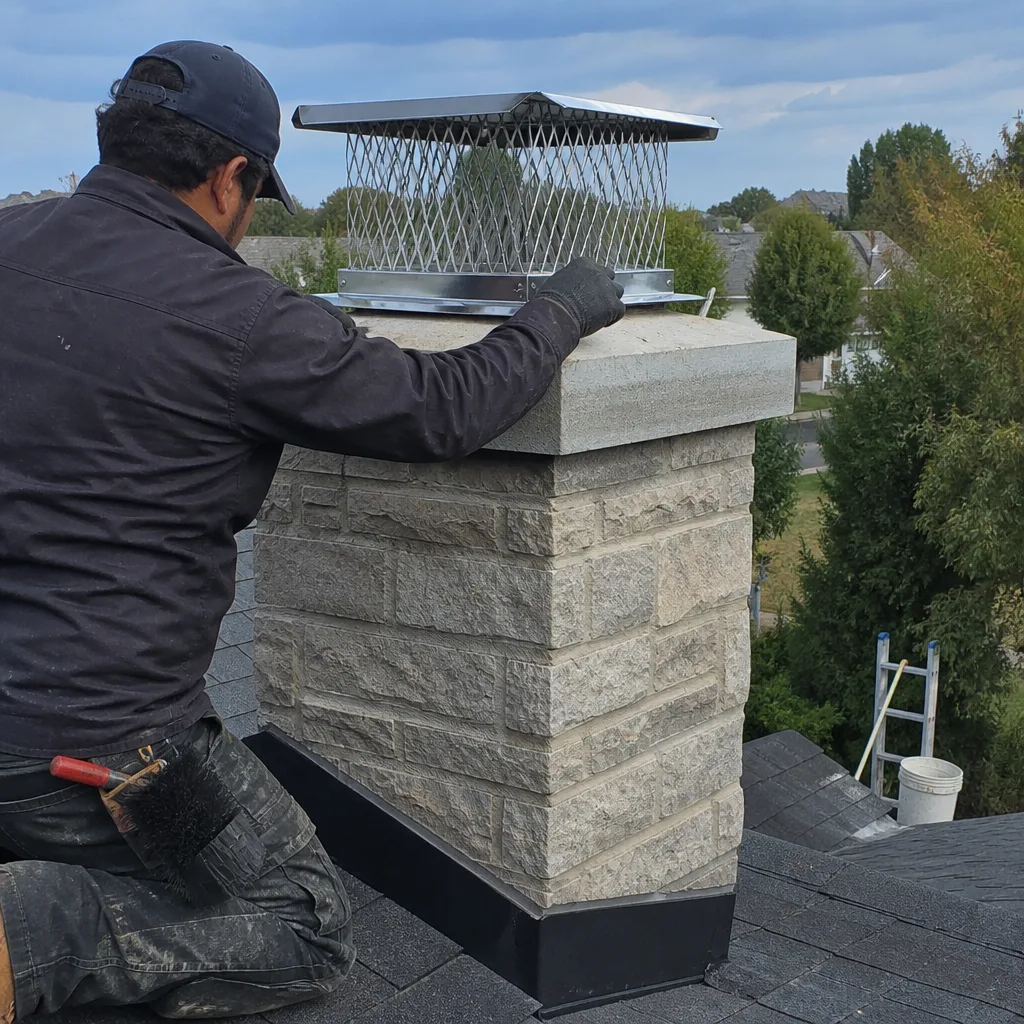
Level 1 sweep and inspection to the NFPA 211 annual standard - flue, crown, cap, and flashing checked and photographed
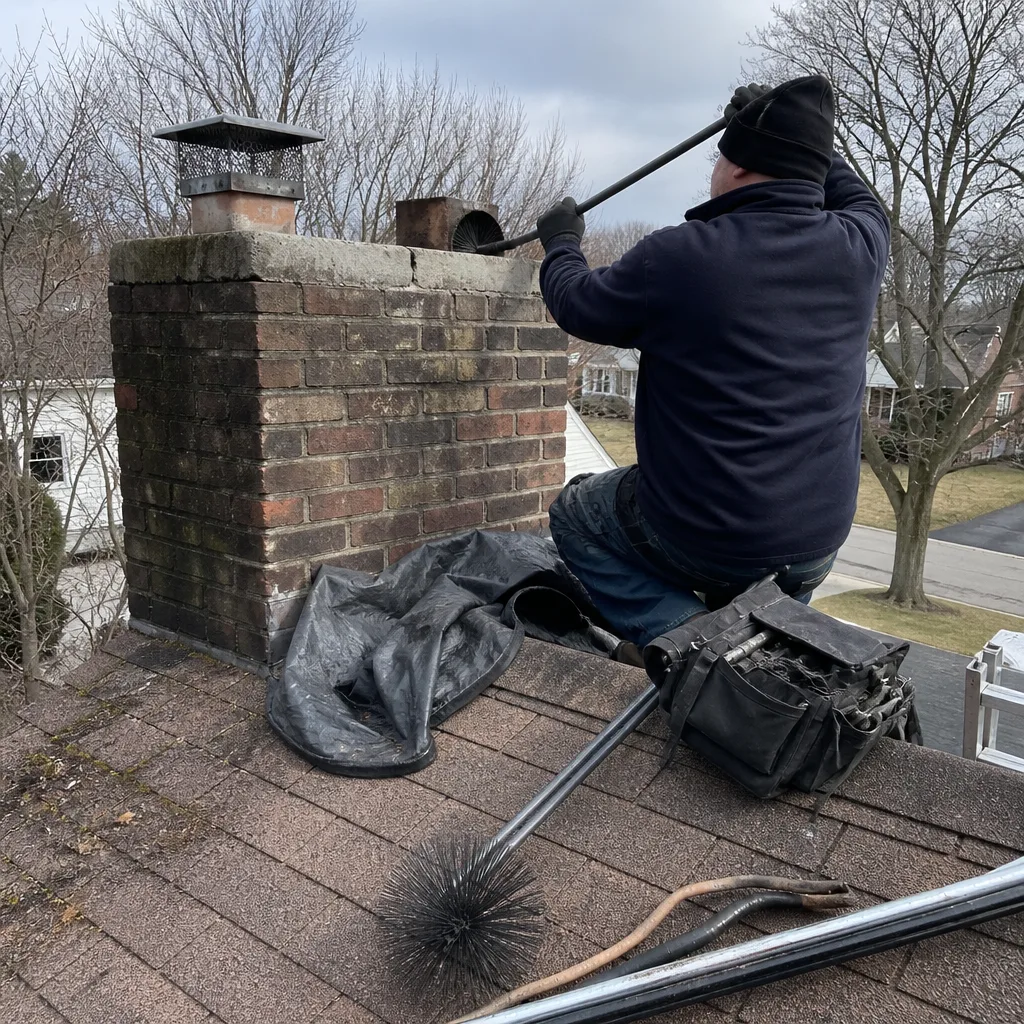
Chimney sweep logs do not sweep chimneys. They loosen some creosote - which then falls where a brush and vacuum still have to collect it.
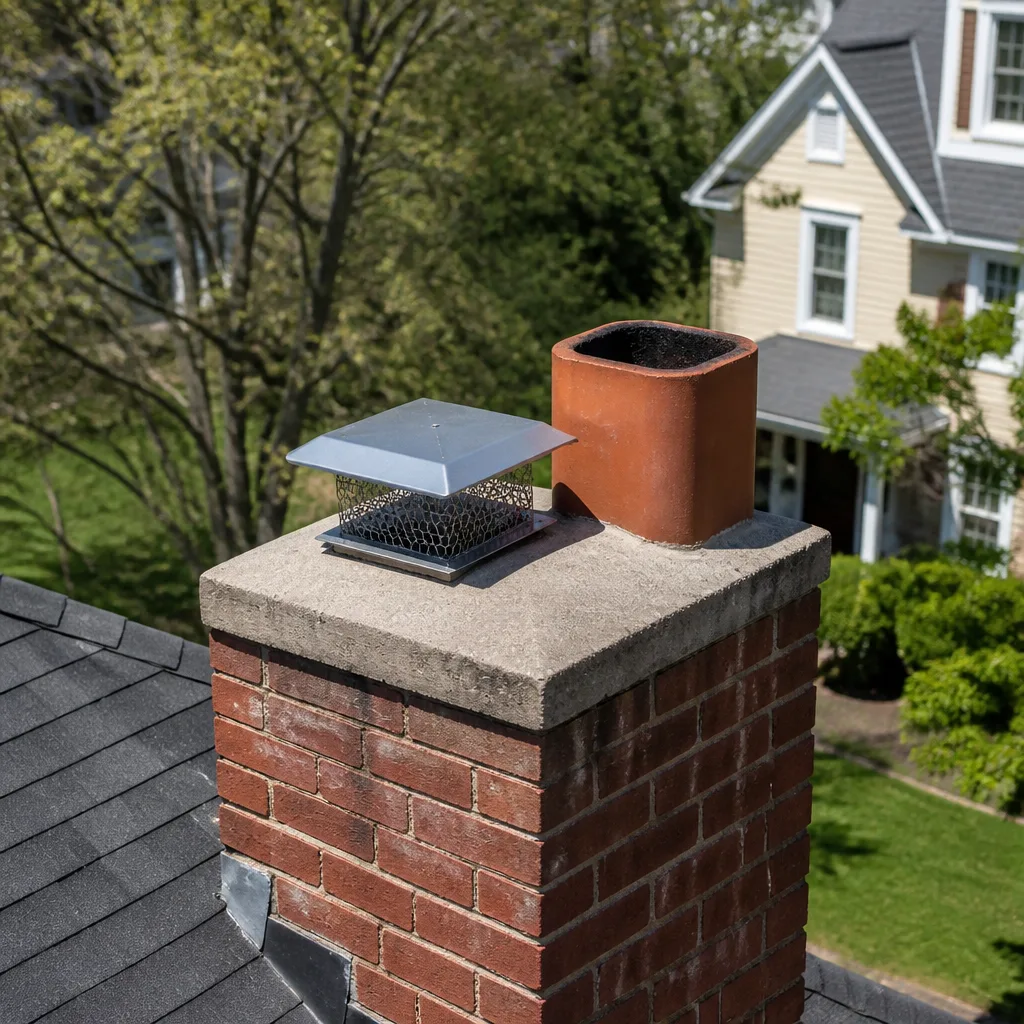
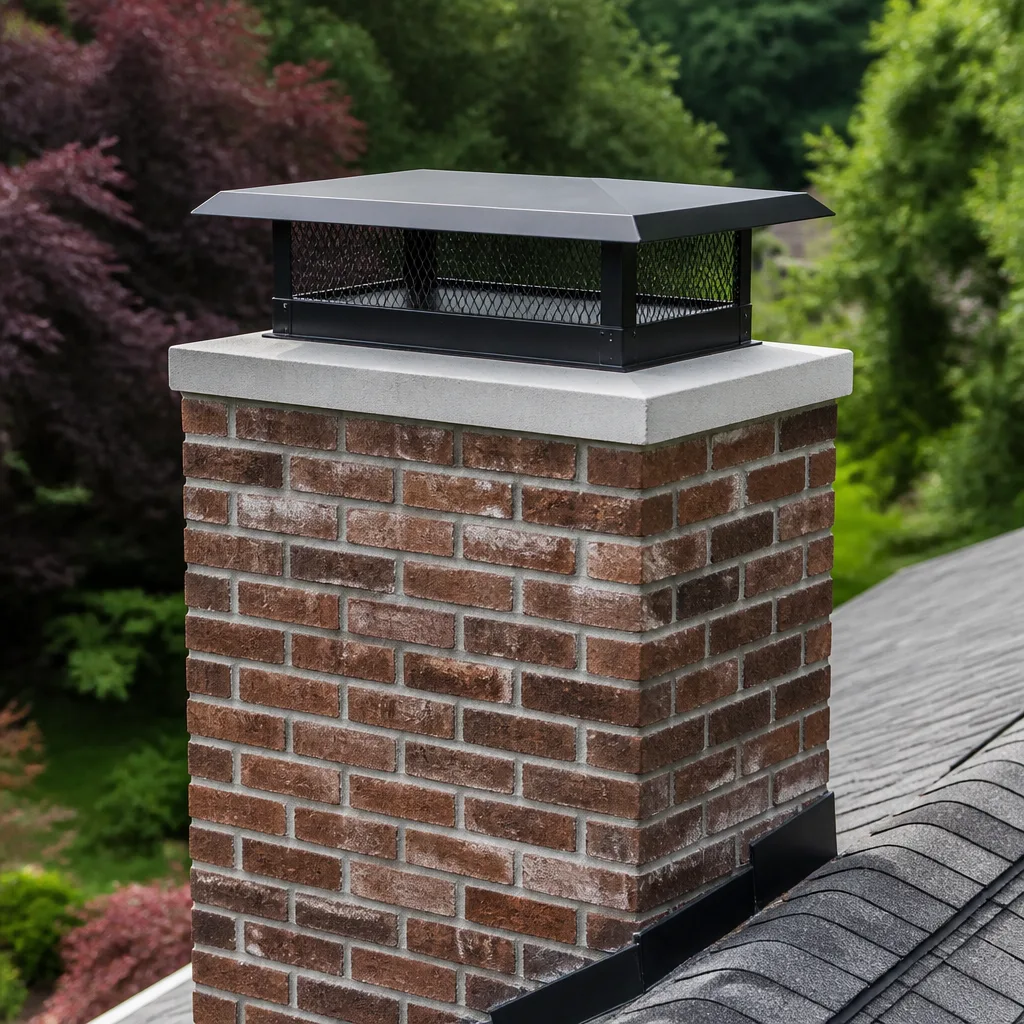
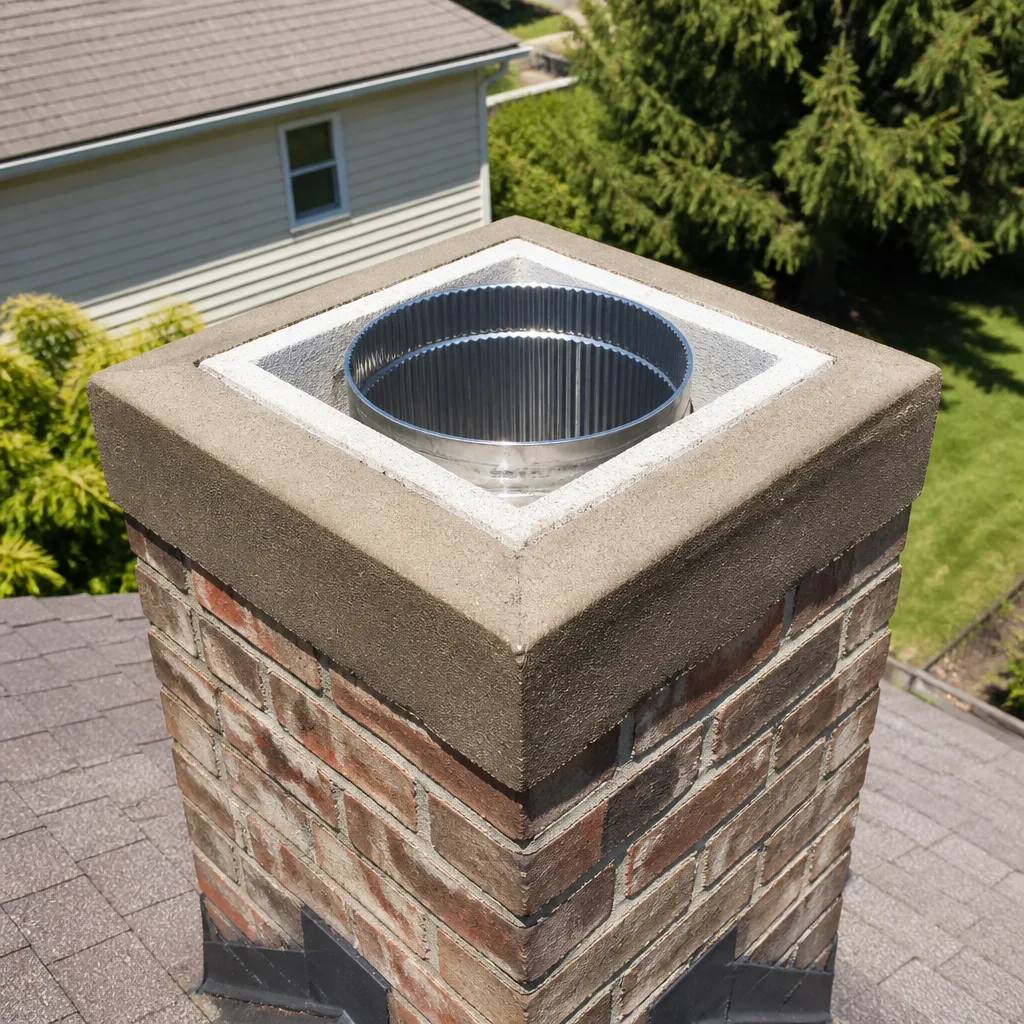
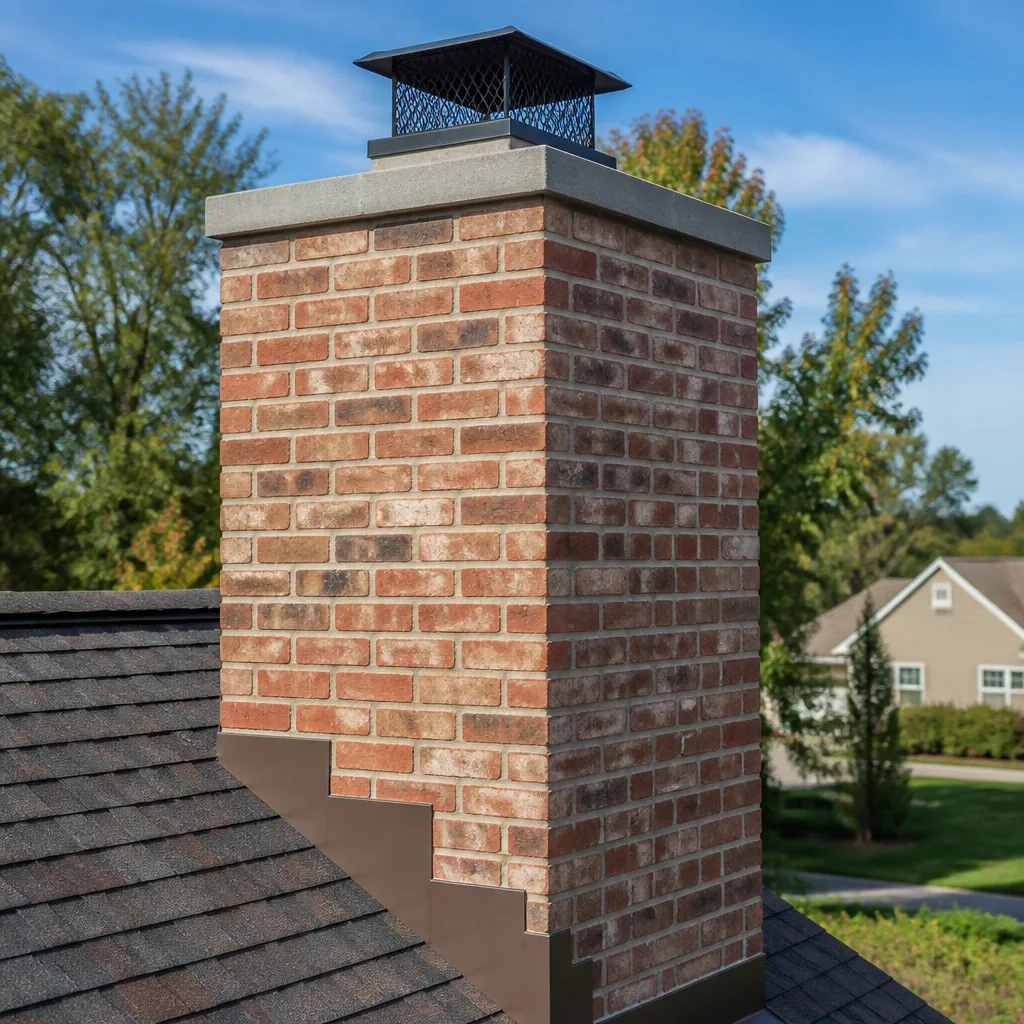
 Before
 After
After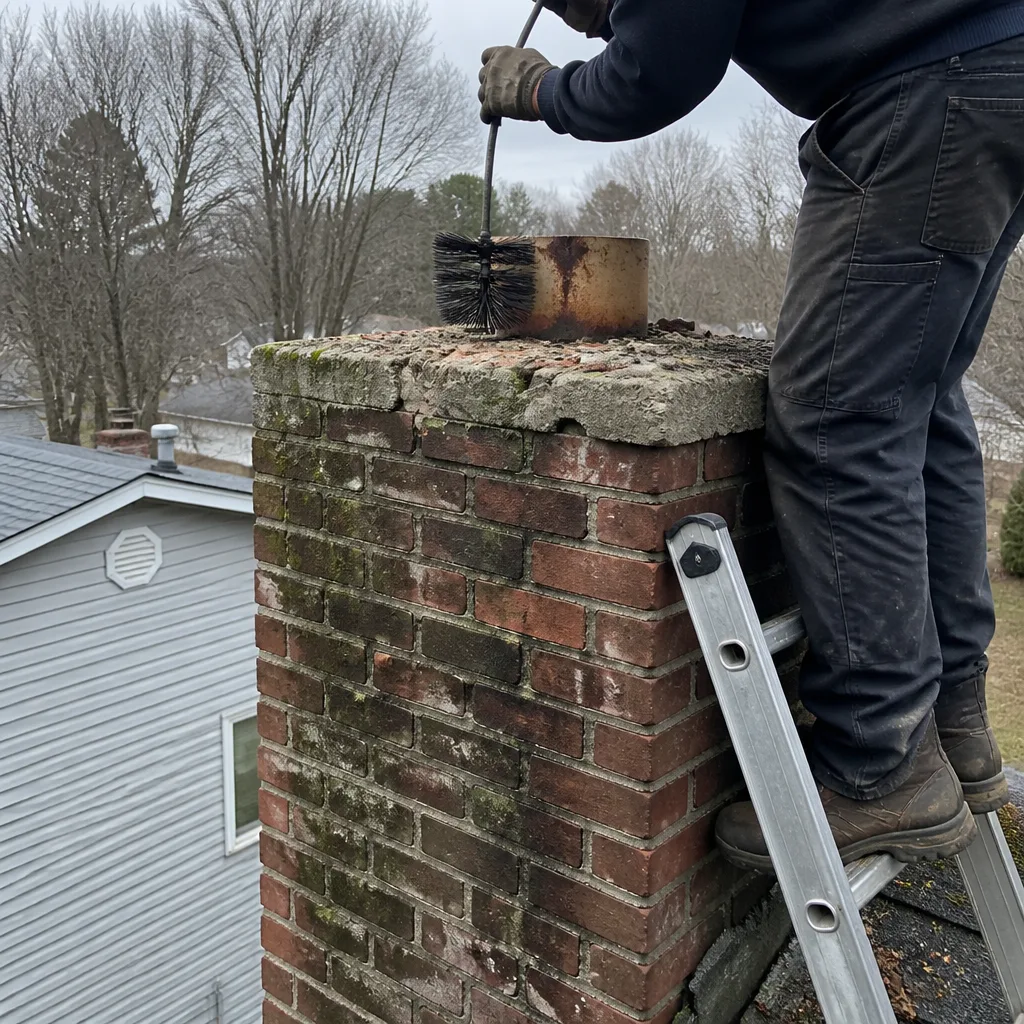 Before
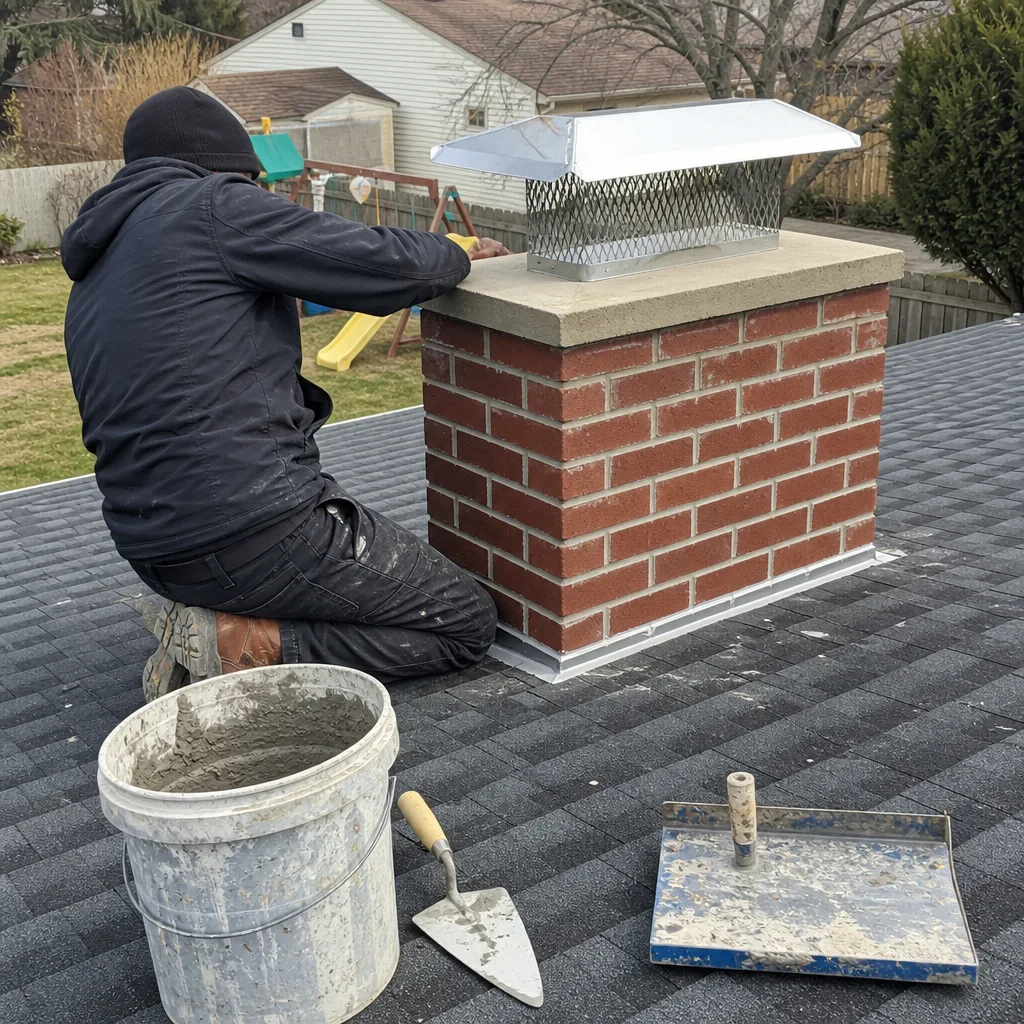 After
AfterSpalling Brick Repair in Plainview, NY
Spalling brick repair in Plainview typically runs between $350 and $1,800 depending on how many courses are affected and how far the damage has traveled into the chimney’s structure – you can read more in How Much Does Chimney Repair Cost? (2026 Price Guide) - Plainview, NY. Most jobs on Long Island homes of this era can be completed in a single visit. The longer spalling goes unaddressed, the more brick you lose – and the more the repair costs.
If you’ve noticed chunks of brick on your roof, a reddish-brown powder dusting the flashing, or face material flaking off your chimney in sheets, that’s spalling. It’s one of the most common chimney problems we see on homes throughout Plainview, and it’s almost always a water story. Freeze-thaw cycles hammer this part of Nassau County hard from November through March. Water works into the porous face of the brick, freezes, expands, and pries the face away from the body. Left alone, what starts as surface flaking becomes structural loss – and structural loss means a rebuild, not a repair.
At Hearthstone Chimney Co., Russell Haines and our crew have been repairing spalled chimneys on Plainview homes since 1984. We document the damage with photos before we touch anything, give you a plain-English explanation of what we found and what it will take to fix it, and back every repair with our 90-Day Done Right Promise – in writing, no arguing. If you’d like a straight answer about what’s happening to your chimney, call us at (934) 348-4832. A live person picks up, every hour of every day.
Spalling brick repair is one part of what we cover under our full Chimney Repair in Plainview service. If there’s more going on – a cracked crown, failed flashing, or a damaged liner – we’ll find it and tell you plainly, all in the same visit.
When You Need Spalling Brick Repair
Spalling doesn’t always look dramatic at first. Here’s what tells us – and should tell you – that the brick is in trouble:
- Brick chips or fragments on your roof or in the gutters. On Plainview homes with low-slope roofs or asphalt shingles that run close to the chimney base, this debris often collects near the back flashing where it’s easy to miss until a gutter cleaning turns it up.
- A powdery red or orange residue around the chimney base. That dust is pulverized brick face – the surface layer separating from the body of the unit. Once you see it accumulating after a wet winter, the process is already well underway.
- Visible pitting, cratering, or flaking on the chimney face. Run a hand along the mortar joints. If the brick face crumbles at light pressure, the bond has failed and water is already inside the masonry.
- Staining or white efflorescence streaking down the chimney. Efflorescence is mineral salt drawn out by water moving through the brick. It signals active moisture migration, which accelerates spalling even if the face still looks mostly intact.
- Interior water stains on the ceiling or firebox walls. In Plainview’s older split-levels and colonials – many built in the 1960s and 70s – the chimney often runs through a finished second floor. Water tracking through spalled brick can stain drywall two floors below the actual damage before anyone looks up.
- Mortar joints recessed more than a quarter inch. Spalling and mortar deterioration usually travel together. If the joints are soft or scooped out alongside flaking brick faces, both problems need to be addressed at the same time or water will find the same path again.
Our Spalling Brick Repair Process
We don’t patch and leave. Here’s how a spalling repair goes from the first call to the finished chimney:
- Inspection and documentation. Before any work begins, we do a thorough visual inspection of the chimney exterior and photograph every area of spalling, cracking, and mortar loss. Where there’s reason to look deeper – particularly if you’ve had smoke or draft problems alongside the visible damage – we run a Level 2 camera inspection of the flue. You get to see the photos. We give you a plain-English description of what we found, not a jargon-heavy report that raises more questions than it answers.
- Scope agreement and upfront pricing. Once we know what we’re dealing with, we give you the number. The number on the estimate is the number on the invoice. If we open something up and find damage that changes the scope, we stop and talk to you before we go further. No surprises on the bill.
- Removal of failed brick units and mortar. Spalled brick that has lost structural integrity gets removed cleanly. We cut out deteriorated mortar from the surrounding joints using angle grinders and hand chisels – not a quick scrape. The bed has to be clean and sound for the new mortar to bond properly.
- Replacement brick selection and installation. Matching the existing brick as closely as possible matters both for appearance and for thermal performance. Plainview homes from the mid-century era often have a specific clay brick profile that we’ve sourced replacements for many times over the years. We use professional-grade materials – including products from Olympia Chimney supply lines where appropriate – not builder-grade substitutes.
- Repointing the affected courses. New brick set into old, uncorrected mortar joints fails faster than it should. We repoint every joint in the repaired section with the correct mortar type for chimney use – a mix that flexes with temperature changes rather than cracking rigid. Most of the old homes in Plainview have lime-based original mortar; matching that composition protects the surrounding brick from the harder Portland-heavy mixes that can actually accelerate spalling on older units.
- Water repellent application. We finish the repaired section – and in most cases the whole chimney face – with a penetrating water repellent rated for above-grade masonry. This step is not cosmetic. It substantially slows the freeze-thaw cycle that caused the spalling in the first place. On Nassau County chimneys that get 40-plus inches of rain a year and hard freezes every winter, skipping this step means we’ll be back in three years doing it again – and we’d rather not be.
Spalling Brick Repair Pricing in Plainview
Spalling brick repair in Plainview runs anywhere from $350 to $1,800 for localized repair work, and more extensive chimney rebuilds – where spalling has compromised multiple wythes or the full stack above the roofline – can run from $2,500 to $6,500 or higher depending on the height and scope. Here’s what drives cost in either direction:
- Number of spalled units: Replacing 4 to 8 individual brick faces and repointing the surrounding joints is a different job than replacing 30 running feet of a chimney’s weather-facing side.
- Height and access: Most Plainview homes are two-story colonials or ranches with accessible chimney stacks. Taller or steeply pitched rooflines require additional staging and time – that’s a real cost and we don’t bury it.
- Extent of mortar deterioration: Spalling rarely travels alone. When the mortar joints in the affected area are also soft or deeply recessed, adding repointing to the scope adds labor time and material – but it’s the right call.
- Whether the crown or cap is also involved: The chimney crown directs water away from the brick. A cracked crown is often the original source of the water that’s spalling the brick below. Addressing the crown at the same time typically costs less than two separate trips.
| Scope of Work | Typical Range (Plainview) |
|---|---|
| Minor repair (4-10 brick units, localized repointing) | $350 – $750 |
| Moderate repair (one face of chimney, full repointing of affected section) | $750 – $1,800 |
| Extensive repair or partial rebuild (multiple courses, structural loss) | $2,500 – $6,500+ |
| Water repellent application (whole chimney, standalone or added) | $150 – $350 |
We also offer $50 off any repair over $250, and a permanent 5% discount for seniors and veterans – no paperwork, just tell us when you call. Estimates are always free. Call (934) 348-4832 to schedule yours.
If you’ve already received a written estimate from another company, bring it to us. We offer a free second opinion on any written estimate – not because we want to undercut everyone, but because homeowners who’ve been around the block deserve a straight second look before they commit to a significant repair.
FAQs – Spalling Brick Repair
What causes brick spalling on chimneys in Plainview?
Spalling in Plainview is almost always caused by water entering the brick and freezing during winter. Nassau County averages more than 40 inches of precipitation annually, and winter temperatures regularly cycle above and below freezing from December through March. When water gets into the porous face of a brick – through an unsealed surface, a cracked crown, or failed mortar joints – it expands roughly 9% when it freezes. That expansion pries the face of the brick away from its body. Older clay brick on homes built in the 1960s through 1980s is particularly vulnerable because the original water repellent treatment has long since worn off. We see the heaviest spalling on the north-facing sides of chimneys in neighborhoods like Manetto Hills and South Plainview, where the face gets less sun and stays wet longer after rain. If you want to know exactly what’s going on with your chimney, call us at (934) 348-4832 and we’ll come take a look.
Is spalling brick a structural problem, or just cosmetic?
Spalling is structural once it progresses past surface flaking. In the early stages – small chips and light surface pitting – the chimney remains sound. But brick that has lost its face layer is now open to water infiltration at the clay core, which accelerates the freeze-thaw damage dramatically. Within a few seasons, localized spalling can work through the full depth of a brick unit and begin compromising the mortar joints around it. At that point, the chimney stack starts to lose its structural integrity from the outside in. On Plainview homes where the chimney runs through finished living space, that water path doesn’t stay at the roofline – it can track into ceilings and walls. The honest answer is: early spalling is repairable; ignored spalling becomes a rebuild. Call (934) 348-4832 if you’re not sure where your chimney falls on that spectrum.
Can I seal or paint over spalling brick to stop the damage?
Painting or coating spalling brick traps moisture inside the masonry rather than blocking it at the surface. That makes the freeze-thaw damage worse, not better. The right treatment is a penetrating water repellent – not a film-forming paint or sealant – applied after the failed brick and mortar have been properly removed and replaced. A penetrating repellent lets the masonry breathe while substantially slowing water absorption. We apply professional-grade repellents rated for chimney masonry as the final step of every spalling repair. Skipping the repair and going straight to a coating is one of the more common things we’re called in to fix after a homeowner or a less experienced contractor tried a shortcut. If you’re uncertain what was applied to your chimney previously, our inspection will tell you.
How long does spalling brick repair take, and will you need to come back?
Most spalling brick repairs on Plainview chimneys are completed in a single visit. Localized repairs – removing failed units, setting replacement brick, and applying water repellent after any needed Chimney Repair work – typically take a half-day to a full day depending on scope. More extensive work involving multiple faces or partial rebuilds may require a second visit if mortar cure time needs to be respected between stages. Every repair we complete is covered by our 90-Day Done Right Promise: if the work isn’t right, we come back and make it right, in writing, no arguing. That’s not a marketing line – it’s the standard Russell Haines has held this company to since 1984. Call (934) 348-4832 for a free estimate and we’ll give you a straight timeline for your specific job.
Why Plainview Homeowners Call Hearthstone
There’s no shortage of chimney companies serving Nassau County. What we hear from Plainview homeowners who’ve called us after a bad experience is usually some version of the same thing: the other company sent someone they didn’t know, gave them a number that changed on the invoice, and didn’t stand behind the work when a problem came up the following winter.
We’ve been in business since 1984 – over 42 years – because we don’t operate that way. Russell Haines built this company on the idea that a craftsman’s reputation is the only thing worth protecting. Our technicians are background-checked and uniformed. They show up when we say they will. The estimate number is the invoice number. And the 90-Day Done Right Promise means that if something isn’t right after we leave, you call us and we come back – no paperwork, no arguing.
We also use professional-grade materials because the repair should outlast the contractor relationship. Products from Gelco and Olympia Chimney supply lines aren’t things you’ll find at a home center – they’re what experienced chimney professionals reach for when they want the job to hold. Builder-grade substitutes save money once and cost it back twice.
If you’re on the home page trying to figure out who to trust with your chimney, the answer we’d give you is the same one we’d give a neighbor: call a few companies, ask what materials they use, ask what happens if the repair fails before winter is over, and see who gives you a straight answer. We think we will.
Spalling brick on a Plainview chimney is a solvable problem. The longer it waits, the more it costs – not because we say so, but because water and winter don’t pause. If you want to know where your chimney stands before the next freeze-thaw season gets underway, call us at (934) 348-4832. The estimate is free. A live person will answer.
Written by Russell Haines, Owner at Hearthstone Chimney Co., serving Plainview.