
Last updated September 10, 2026
Level 1 sweep and inspection to the NFPA 211 annual standard - flue, crown, cap, and flashing checked and photographed
Chimney sweep logs do not sweep chimneys. They loosen some creosote - which then falls where a brush and vacuum still have to collect it.
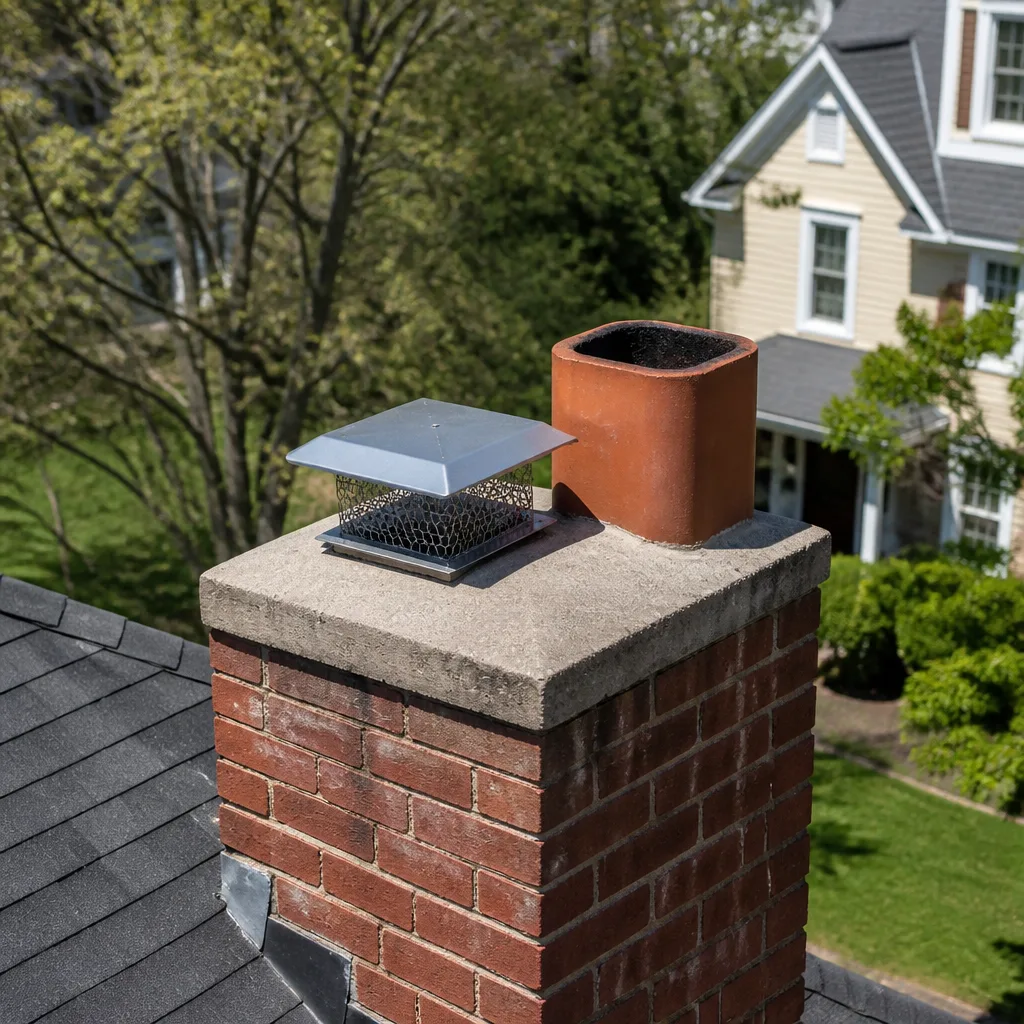
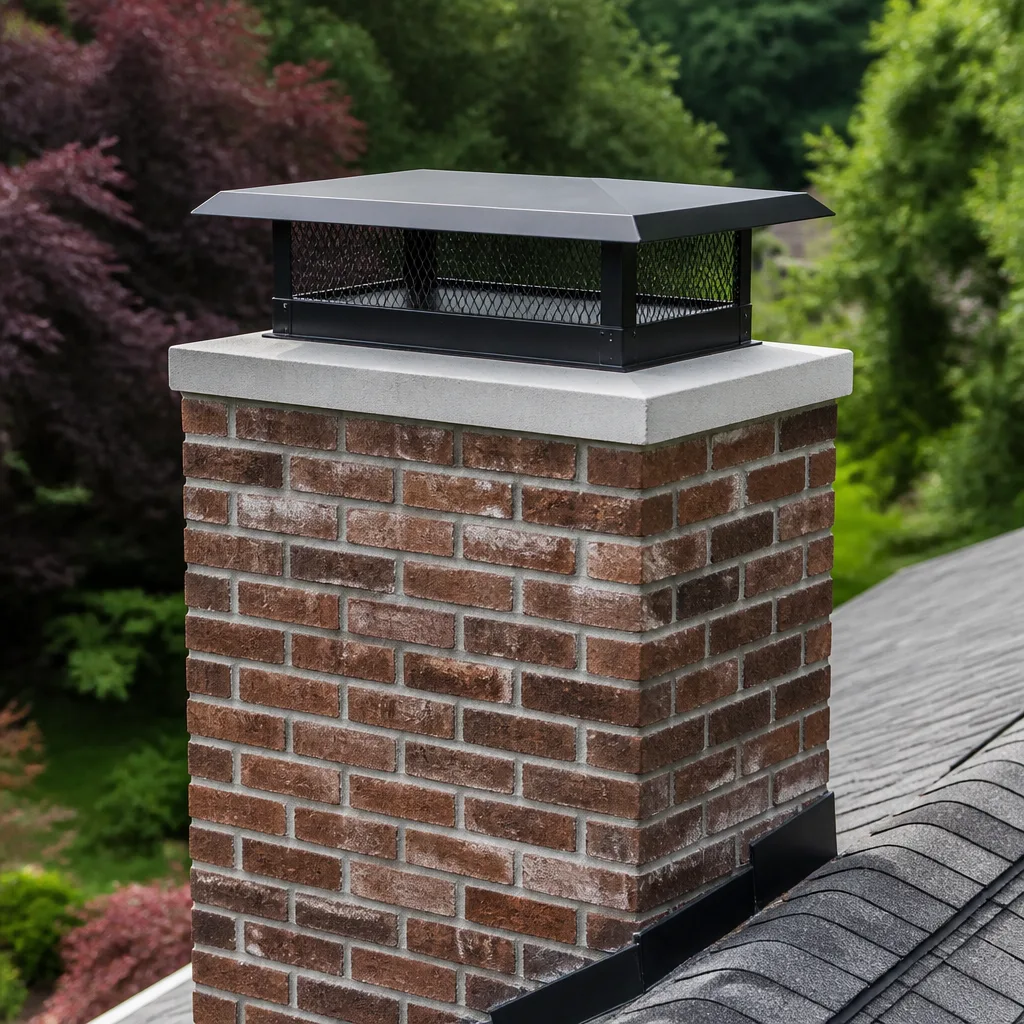
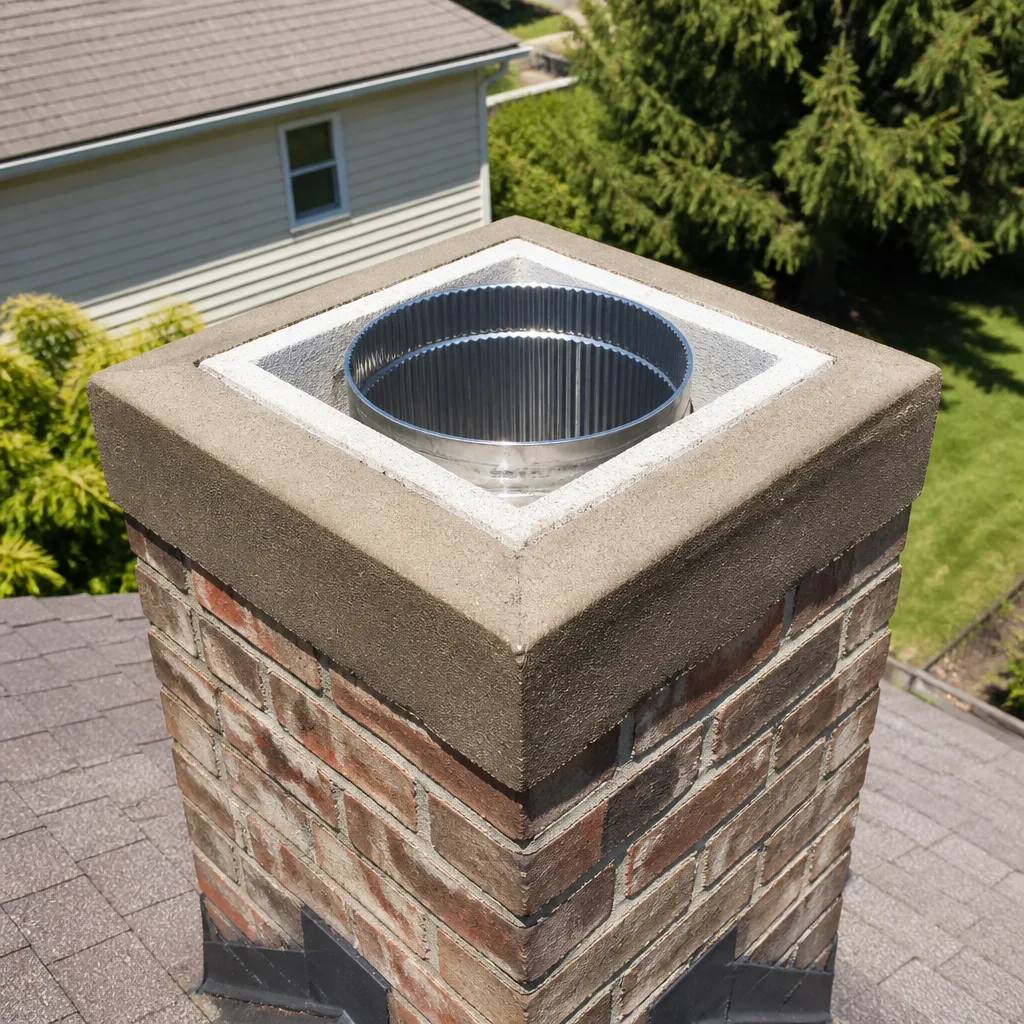
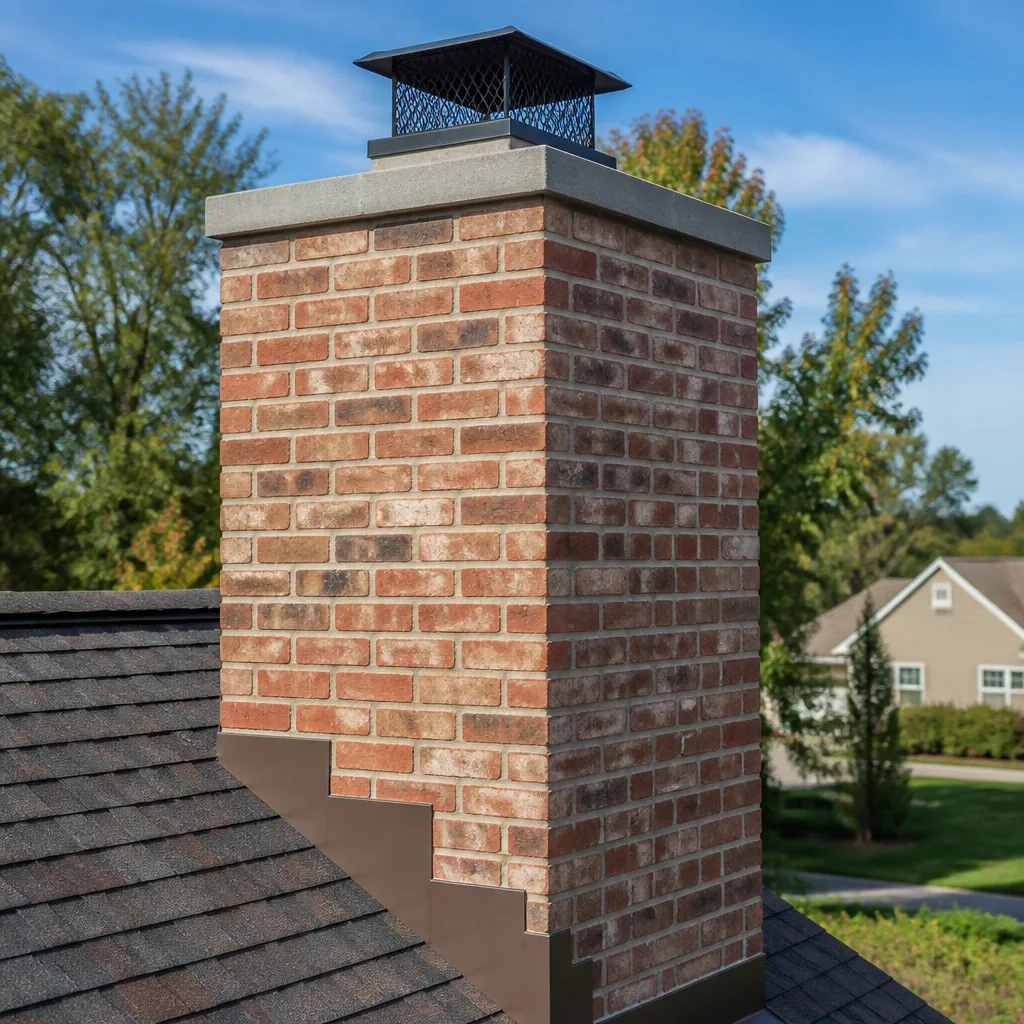
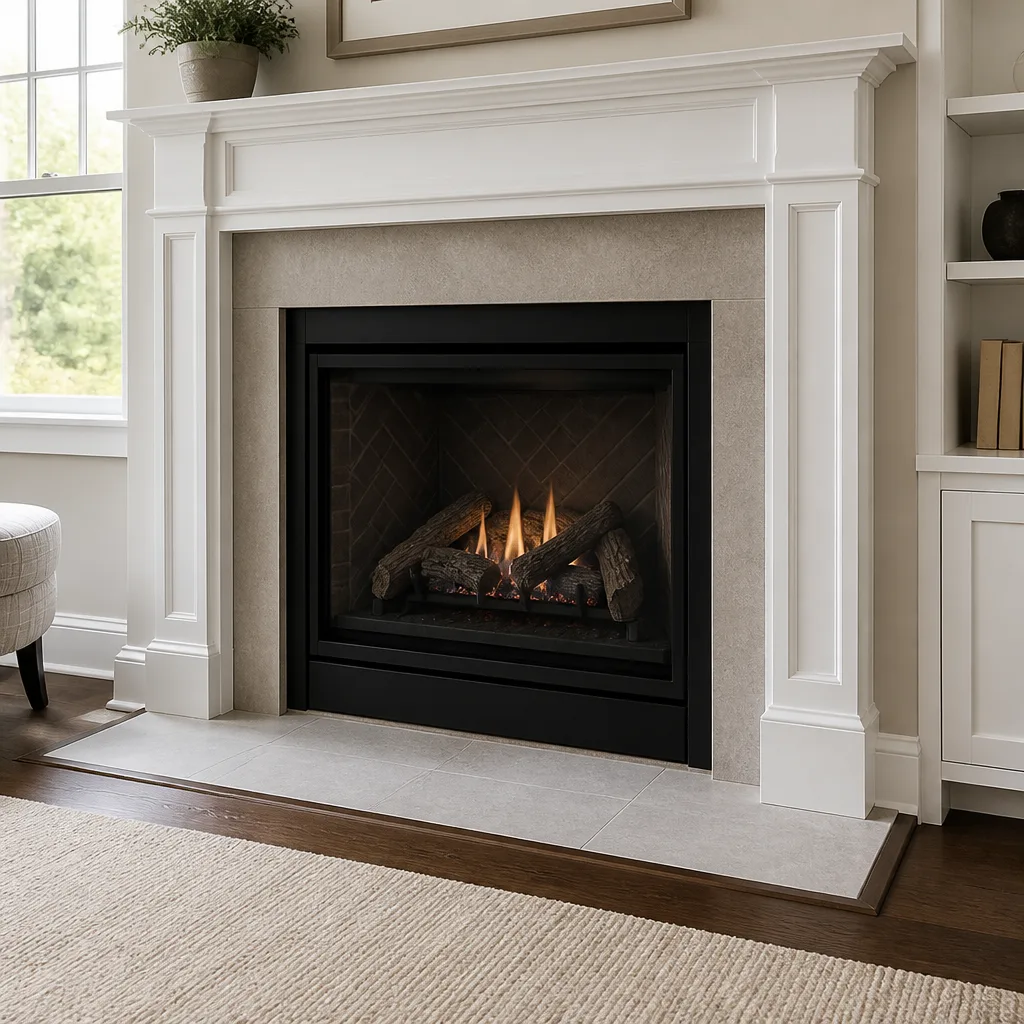
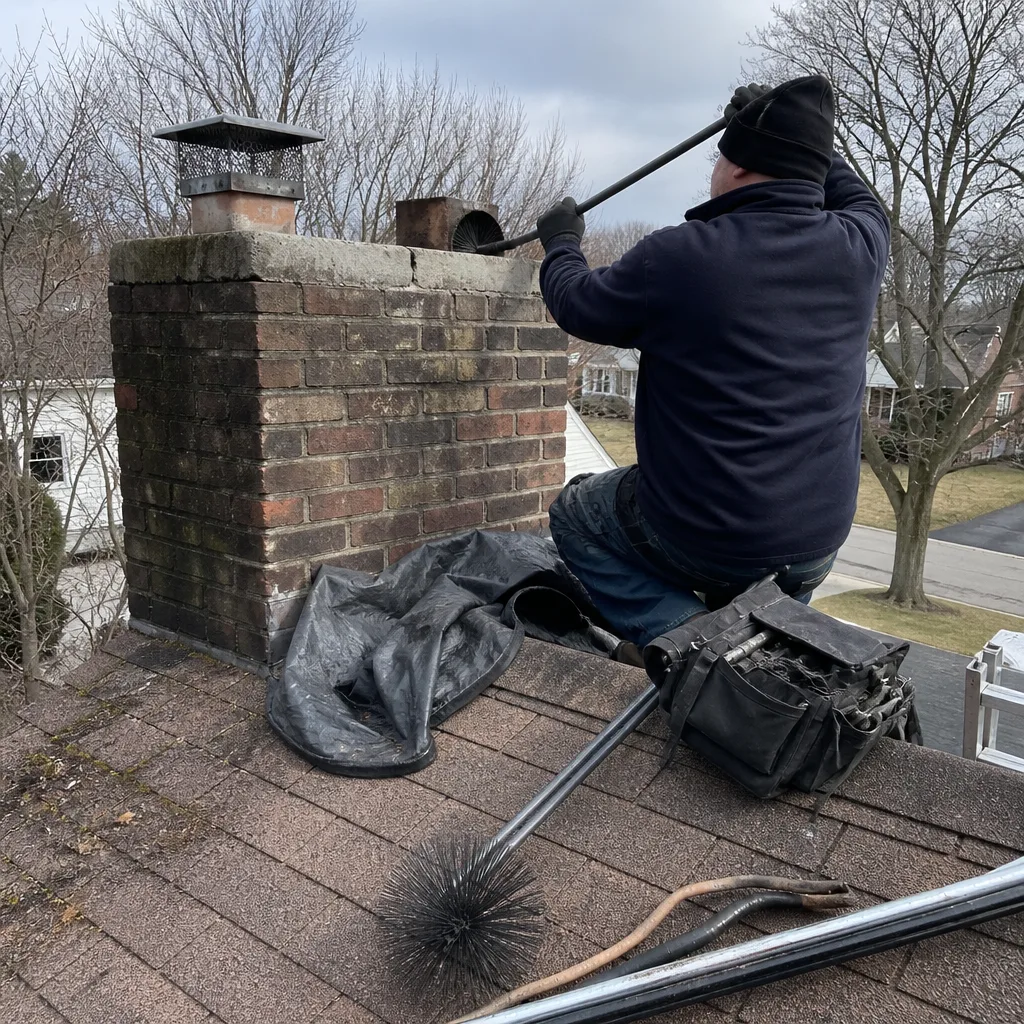 Before
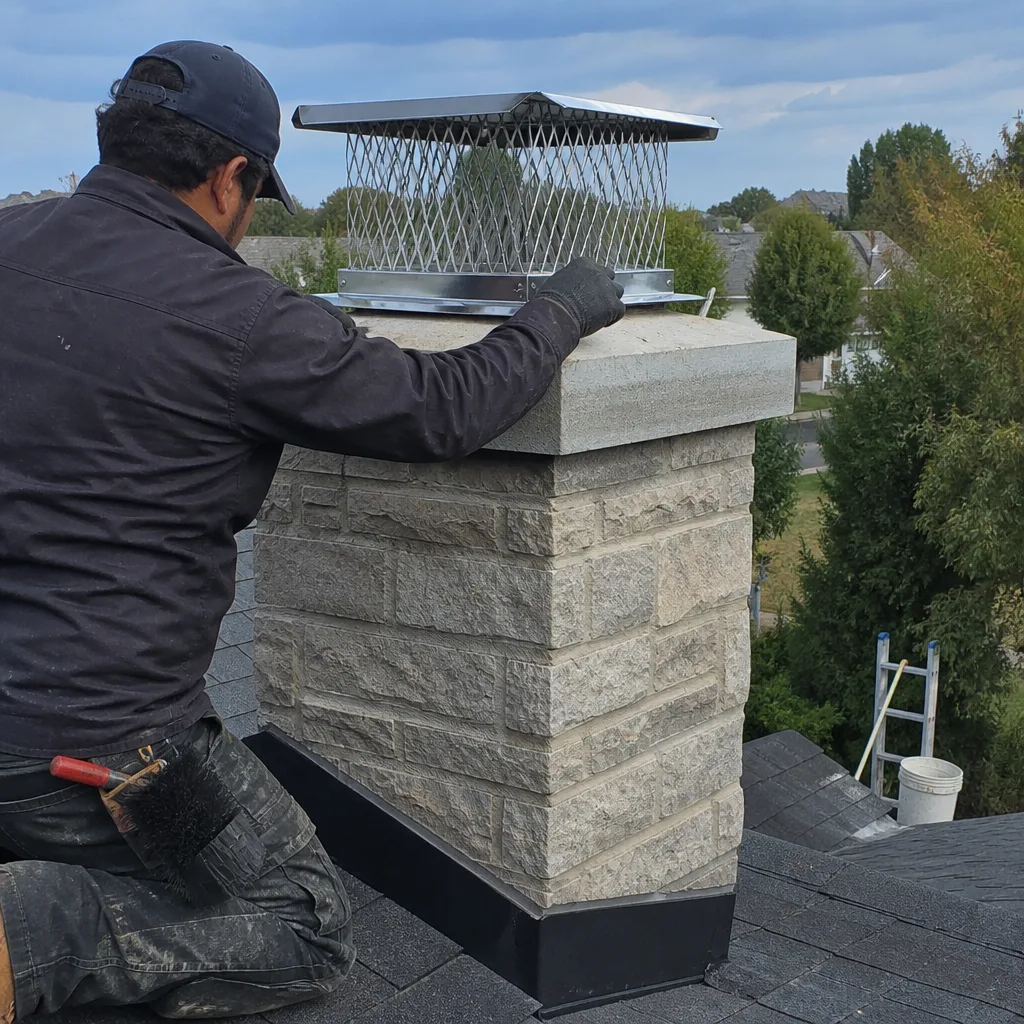 After
After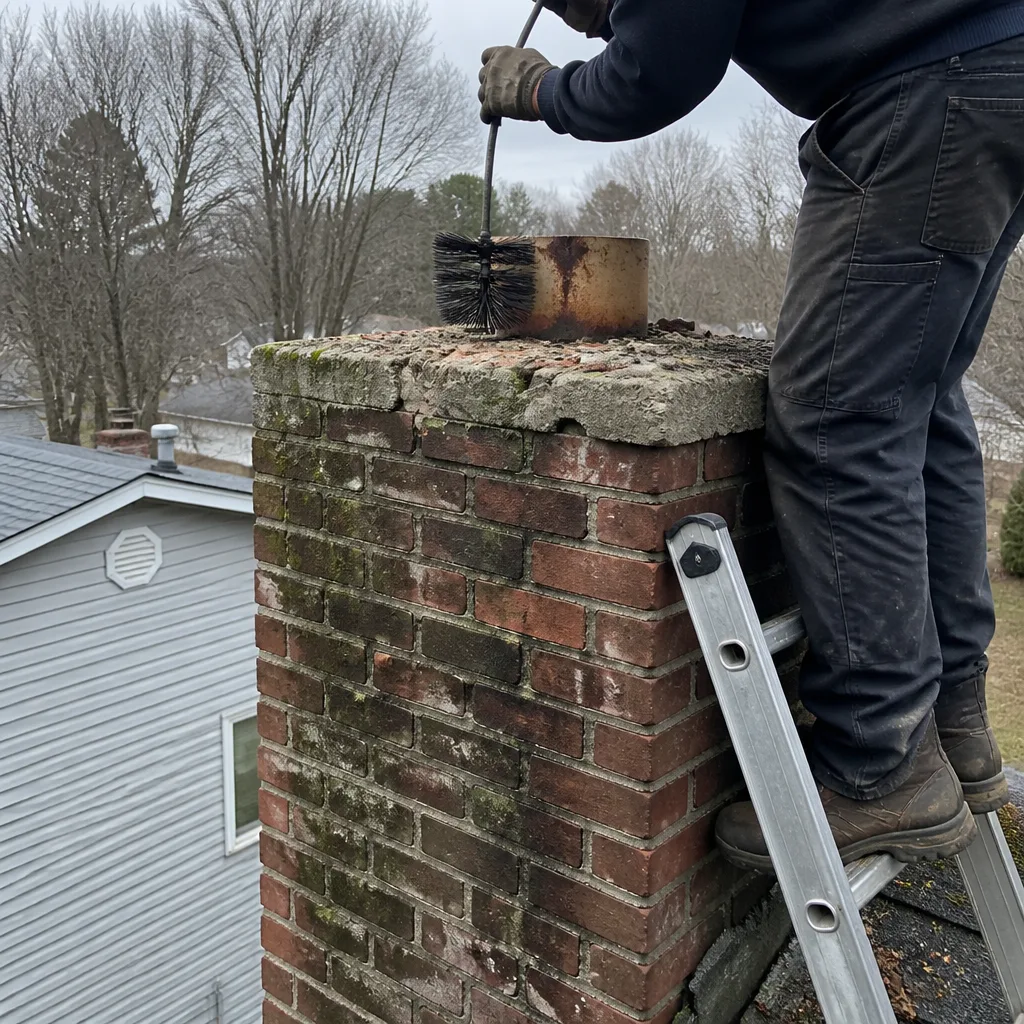 Before
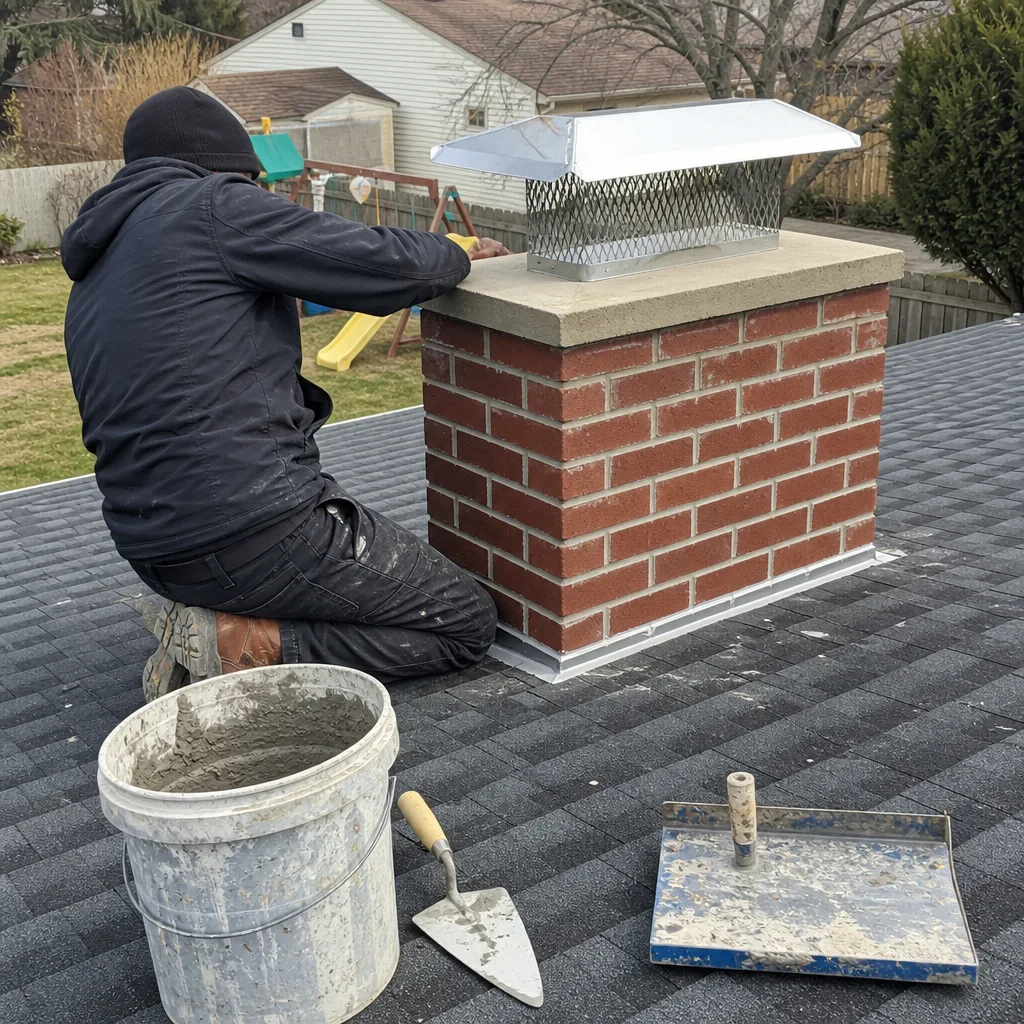 After
AfterChimney Cleaning Permits, Codes & Inspections in NY: What You Need to Know
Here’s the distinction that catches Plainview homeowners off guard: a routine chimney cleaning requires no permit whatsoever, but the moment your sweep finds a cracked flue liner, a spalling crown, or a deteriorated firebox and recommends repair, you’ve crossed into territory where New York State and Nassau County building codes demand permits, inspections, and licensed contractor oversight. We’ve been sweeping chimneys in Plainview for over 42 years, and we’ve seen the aftermath when this line gets blurred - work completed by well-meaning handymen or cut-rate outfits that surfaces years later during a home inspection, killing a sale or voiding an insurance claim. This guide - alongside our Complete Guide to Chimney Cleaning in Plainview - explains exactly where that line sits, how to protect yourself, and what paperwork to demand from any contractor who sets foot on your roof.
Quick Answer
Chimney cleaning and sweeping alone do not require a permit in New York State or Nassau County. However, repairs to flue liners, chimney crowns, caps, fireboxes, or structural masonry do require permits pulled by a licensed contractor, with inspections at rough-in and final completion. Unpermitted chimney repairs can void your homeowner’s insurance after a fire and surface as defects during home sales in Plainview’s competitive market.
Table of Contents
- Where the Line Lives: Cleaning vs. Repair Under NY Code
- Nassau County Permits: What Gets Pulled and Who Pulls It
- NFPA 211 Meets Local Code: The Layered Rules Governing Your Chimney
- How Unpermitted Chimney Work Affects Your Insurance
- How to Verify Permits and Inspections Yourself
- What to Ask Before Hiring Any Chimney Contractor
- Plainview-Specific Considerations: Climate, Housing Stock, and Code Enforcement
- Common Mistakes to Avoid
- When to Call a Professional
- Frequently Asked Questions
- The Bottom Line
Where the Line Lives: Cleaning vs. Repair Under NY Code
New York State Building Code, based on the International Residential Code with state amendments, draws a sharp line between maintenance and alteration. Understanding this distinction saves you from contractors who blur it intentionally or through ignorance.
Maintenance (no permit required):
- Removal of creosote, soot, and debris from flue walls
- Basic firebox ash removal and hearth cleaning
- Visual inspection of accessible components without disassembly
- Installation of standard chimney caps that do not alter structural opening or require roof penetration beyond existing flue termination
Repair/Alteration (permit required):
- Flue liner repair, replacement, or relining with stainless steel or cast-in-place systems
- Crown repair or reconstruction involving demolition and repouring
- Firebox brick replacement or refractory panel installation
- Smoke chamber parging or modification
- Chimney rebuilds, partial or complete
- Damper replacement when framed into masonry structure
- Installation of inserts or connection of factory-built appliances to masonry chimneys
The code threshold is functional alteration. If the work changes the appliance’s venting characteristics, the chimney’s structural integrity, or its clearance to combustibles, it triggers permit requirements. This is why a chimney cleaning and sweep in Plainview stays permit-free only when the sweep’s hands stay out of the structure.
We’ve inspected homes in the Manor Oaks and Juniper Park neighborhoods where previous owners had liners installed by unpermitted contractors. The work looked fine from the firebox. Our camera inspection revealed gaps at the liner top, improper collar connections, and missing insulation - all hidden from view, all failing code, all potential fire hazards. The current owners faced $3,800 to $5,200 in corrective work before they could list their homes.
The 2020 and 2024 New York State Building Code cycles maintain this framework. Local amendments in Nassau County do not relax these requirements; they add layers for coastal wind zones and specific inspection protocols that we’ll cover next.
Nassau County Permits: What Gets Pulled and Who Pulls It
Nassau County operates under a unified building permit system administered by the Nassau County Department of Public Works for unincorporated areas, with incorporated villages like Plainview handling their own permit offices. This matters because permit requirements, fees, and inspection schedules vary slightly between county and village jurisdictions.
Permit application requirements for chimney repair work:
- Licensed contractor: Only a New York State-licensed home improvement contractor or licensed plumber (for gas venting) can pull a chimney repair permit in Nassau County. The license number must appear on the application.
- Detailed scope of work: The application must specify liner type (stainless steel alloy grade, cast-in-place, or clay), crown dimensions and reinforcement, or masonry reconstruction details.
- Manufacturer specifications: For liner installations, the permit package must include UL 1777 listing documentation for the liner system. We use Olympia Chimney and DuraFlex stainless systems specifically because their documentation packages satisfy Nassau County examiners without revision cycles.
- Site plan: Chimney location relative to property lines and roof ridgeline, required for height and setback verification.
- Insurance certificate: General liability and workers compensation coverage must be current and name the county or village as certificate holder.
Inspection sequence:
- Rough inspection: For liner installations, after the liner is dropped but before top connections are sealed. The inspector verifies proper sizing, insulation placement, and clearance to combustibles.
- Final inspection: After all work is complete, with appliance connected and operational. The inspector confirms proper termination height, spark arrestor compliance, and visible structural integrity.
Permit fees in Nassau County run approximately $150 to $400 depending on project valuation, with village fees in Plainview typically at the lower end for residential chimney work. The contractor should include permit costs in their upfront pricing - we do, with no surprises on the bill.
Critical point: the homeowner cannot pull their own permit for chimney repair work in Nassau County. This is not like a fence permit or a deck where an owner-builder exemption exists. Chimney work affecting combustion venting requires licensed contractor oversight from application through final sign-off.
NFPA 211 Meets Local Code: The Layered Rules Governing Your Chimney
Every chimney in Plainview operates under three overlapping regulatory frameworks. Understanding how they interact explains why two chimneys with identical problems might require different solutions.
NFPA 211: Standard for Chimneys, Fireplaces, Vents, and Solid Fuel-Burning Appliances
The National Fire Protection Association publishes this standard, updated every three years (currently 2024 edition). It is not law in itself but is adopted by reference into New York State code. NFPA 211 establishes minimum safety requirements for:
- Chimney construction and clearances to combustible materials
- Liner sizing relative to appliance BTU output and flue area ratios
- Inspection frequencies and scope (Level 1, 2, and 3 definitions)
- Maintenance standards for creosote accumulation limits
The standard mandates Level 2 camera inspections whenever a property changes hands, after chimney fires, or before liner installation. This is not optional guidance; it is the inspection protocol Nassau County inspectors expect documented when permit applications involve concealed flue conditions.
New York State Building Code (IRC Chapter 10 and IMC Chapter 10)
State code layers on structural requirements:
- Masonry chimney wall thickness minimums (4-inch solid masonry or equivalent)
- Reinforcement requirements for chimneys over certain heights
- Seismic bracing provisions adopted for New York’s moderate seismic zone
- Energy code requirements affecting damper specifications and combustion air supply
Nassau County Local Amendments
Local amendments address regional conditions:
- Wind exposure: Chimney caps and terminations must withstand 110 mph gust exposure in coastal zones, which includes all of Plainview. Famco and Copperfield cap systems we specify are rated for this loading.
- Floodplain considerations: In FEMA-designated zones, cleanout doors and ash dump locations require waterproofing details we document in our photo reports.
- Inspection documentation: Nassau County requires photographic evidence of liner top connections and crown slope for final sign-off - precisely the documentation our Level-2 inspections produce as standard practice.
The interaction works like this: NFPA 211 tells you what safe looks like, state code tells you how to build it, and Nassau County amendments tell you how to prove it for local conditions. A contractor fluent in all three - not just one - is what your chimney deserves.
How Unpermitted Chimney Work Affects Your Insurance
This is where the abstract becomes painfully concrete. We’ve taken calls from Plainview homeowners whose insurers denied claims after chimney fires, and the denial letter always lands on the same point: unpermitted alteration of a combustion venting system.
How insurance companies investigate after chimney fires:
- The adjuster requests permit history for any chimney work in the prior 10 years.
- If no permits exist for liner or repair work, the insurer engages a forensic engineer to determine if the unpermitted work contributed to the fire origin.
- The engineer examines installation quality, material specifications, and code compliance.
- If deficiencies are found - improper liner sizing, missing insulation, inadequate clearances - the insurer denies coverage based on policy exclusions for unpermitted modifications or known maintenance neglect.
We’ve seen this pattern in Old Country Road area homes and newer construction near Plainview-Old Bethpage Road. The homeowner paid $1,200 for a “deal” on liner installation by an unlicensed operator. After the fire, they faced $47,000 in structural repairs with no coverage, plus potential subrogation claims from neighboring properties if embers spread.
Home sale impacts are equally severe. Nassau County requires disclosure of unpermitted work on seller property condition statements. Home inspectors increasingly use permit databases as standard practice. A chimney with unpermitted repairs triggers:
- Buyer credit demands for permit remediation and reinspection ($2,000 to $6,000 typical)
- Delayed closings while permits are retroactively pulled and inspected
- In extreme cases, deal cancellation and relisting with defect disclosure
The 90-Day Done Right Promise we provide in writing exists partly because we know our work will be examined - by inspectors, insurers, and buyers - years after we complete it. Permits are the paper trail that protects everyone.
How to Verify Permits and Inspections Yourself
You should never take a contractor’s word that permits were pulled and signed off. The verification process is straightforward and free.
For Nassau County jurisdiction (unincorporated areas):
- Visit the Nassau County Department of Public Works Building Division online permit portal or call their Mineola office.
- Search by property address or block/lot number.
- Review open and closed permits. A properly completed job shows: permit issued, rough inspection passed, final inspection passed, certificate of completion or compliance issued.
- Request a printed permit history for your files - this becomes valuable documentation at sale time.
For Plainview village jurisdiction:
- Contact the Plainview Building Department at village hall.
- Permit records are public information; you need only provide the property address.
- Verify that the contractor license number on the permit matches the license number on your contract.
- Confirm inspection dates align with your project timeline - inspections should occur within days of rough and final completion, not weeks or months later.
Red flags in permit records:
- Permit pulled after work completion (backdated permits indicate the contractor got caught, not that they followed procedure)
- Rough inspection passed but no final inspection (work may be incomplete or abandoned)
- Permit in a different contractor’s name than who performed the work (possible license borrowing or illegal subcontracting)
- Permit scope narrower than actual work performed (a liner and crown repair permitted only as “cap replacement”)
We provide permit numbers, inspection dates, and completion certificates with every chimney repair in Plainview we perform. Our customers file them with their home maintenance records. In 42 years, we’ve never had a customer regret having that paperwork.
What to Ask Before Hiring Any Chimney Contractor
The right questions reveal whether a contractor operates within the permit system or around it. Ask these before signing any agreement.
Essential questions:
- “Will you pull all required permits for this work, and is that cost included in your estimate?” The answer must be yes, with specific permit types named. Vague assurances like “we handle all that” demand clarification.
- “What is your New York State home improvement contractor license number?” Verify it at the New York Department of State Division of Consumer Protection. Unlicensed contractors cannot legally pull permits.
- “Will you provide manufacturer documentation for all materials?” For liners, this means UL 1777 listing sheets. For crowns, specified concrete mix and reinforcement details. We use HeatShield and Gelco products with full documentation packages.
- “What inspections will occur, and will I receive signed completion documentation?” Both rough and final inspections should be named, with certificates provided.
- “Are your technicians employees or subcontractors?” Subcontractor arrangements complicate permit accountability and insurance coverage. Our technicians are background-checked, uniformed employees.
- “What happens if inspection fails?” The contractor should absorb correction costs if their work caused the failure. Our 90-Day Done Right Promise covers this explicitly - in writing, no arguing.
Documentation to receive before final payment:
- Permit application copy with your property address and project scope
- Insurance certificate naming you as additional insured during work period
- Inspection sign-off cards or electronic confirmation for rough and final
- Photo documentation of concealed work (liner top, smoke chamber, crown underside)
- Written warranty or guarantee with clear terms and duration
A contractor who resists any of these questions or pressures for quick commitment without documentation is telling you something important about how they operate. Listen.
Plainview-Specific Considerations: Climate, Housing Stock, and Code Enforcement
Plainview’s particular conditions shape how chimney codes apply and why permit compliance matters more here than in some neighboring markets.
Housing stock age and type:
Plainview developed primarily in the 1950s through 1980s, with significant infill construction continuing into the 2000s. This means:
- Mid-century ranch and split-level homes with original clay tile liners, now 50 to 70 years old and often cracked from thermal cycling
- 1980s construction with factory-built metal chimneys reaching end of design service life
- Custom homes with multiple fireplaces where original construction quality varies significantly
In the Cheshire and Belmont sections, we’ve found original 1960s clay liners deteriorated to the point that NFPA 211 would classify them as “immediately hazardous” - yet they were still being used because no professional inspection had occurred. A cleaning alone cannot reveal this; only a Level-2 camera inspection can.
Climate and freeze-thaw damage:
Nassau County’s coastal climate produces more annual freeze-thaw cycles than inland New York regions. Plainview chimneys experience:
- Crown cracking from water infiltration and expansion, accelerated by de-icing salt aerosol from nearby parkways
- Spalling brick faces where moisture penetrates mortar joints, freezes, and delaminates the brick surface
- Flue liner joint separation as thermal expansion coefficients differ between clay and surrounding masonry
These conditions make “maintenance only” chimneys rare in Plainview. Most homes we service need some repair element, which triggers permit requirements. The homeowner who assumes their annual sweep keeps them fully compliant often discovers otherwise at the worst possible moment.
Code enforcement trends:
Nassau County has tightened chimney-related enforcement since 2019, driven by:
- Increased home sale volume and inspector vigilance
- Insurance industry pressure following several high-profile chimney fire losses
- Integration of permit databases with real estate disclosure systems
Plainview’s building department has specifically increased spot inspections of chimney work advertised on social media and contractor platforms. The “no one will know” approach to unpermitted work has never been riskier.
For fireplace services in Plainview that may involve insert installation or factory-built appliance connections, permit requirements are even more stringent due to combustion air and hearth extension rules. These projects always require professional-grade materials and documented compliance - the reason we specify Copperfield and Olympia Chimney components with full certification packages.
Common Mistakes to Avoid
- Assuming annual sweeping covers all compliance needs. Cleaning removes creosote but does not address structural condition, liner integrity, or permit status of prior repairs. Schedule Level-2 inspections separately from cleaning at change of ownership or every 5 years per NFPA 211.
- Hiring based on lowest price without permit verification. The $800 liner “special” almost never includes permit costs, proper materials, or inspection compliance. The true cost reveals itself at sale or claim time.
- Accepting verbal assurances about permit status. Every permit has a paper trail. Demand copies. Verify independently. We’ve rescued Plainview homeowners who trusted “don’t worry about it” and paid dearly later.
- Neglecting to transfer permit completion to new owners. If you sell within months of chimney work, ensure completion certificates transfer with disclosure documents. Unpermitted work you inherited becomes your liability if you fail to document its correction.
- Using general handymen for crown or masonry repairs. Masonry skills do not equal chimney code knowledge. We’ve rebuilt crowns “repaired” by handymen who used standard mortar instead of proper crown mix, creating worse water problems than they solved.
- Ignoring manufacturer installation requirements. Even quality materials like DuraFlex liners fail prematurely when installers skip insulation requirements or use improper connector fittings. Manufacturer warranties require documented proper installation - another reason permits matter.
- Failing to photograph concealed work yourself. Our camera inspections provide photos you can see, a plain-English verdict. If your contractor won’t show you what they found and what they did, find one who will.
When to Call a Professional
Call a licensed chimney professional when: your sweep recommends any repair beyond creosote removal; you’re purchasing a home and need a Level-2 inspection for insurance or mortgage requirements; you’ve had a chimney fire, however minor; your homeowner’s insurance requests documentation of chimney condition; or you’re preparing to list your property and want clean permit history.
Hearthstone Chimney Co. offers free estimates in Plainview. We’ll inspect your chimney, document what we find with photos you can see, explain exactly what requires permits and what doesn’t, and provide upfront pricing with no surprises on the bill - then point you to more guides & resources for staying compliant. Calls are answered by a live person 24 hours a day, 7 days a week - every day, every hour. Reach us at (934) 348-4832.
Frequently Asked Questions
No. Routine chimney cleaning and sweeping do not require permits in Plainview or anywhere in Nassau County. Permits become required only when the work involves structural repair, liner installation, crown reconstruction, firebox modification, or appliance connection changes. Call (934) 348-4832 for a free estimate - we’ll tell you exactly where your project falls.
Permitted stainless steel liner installations in the Plainview market typically range from $2,800 to $5,500 depending on flue count, liner diameter, insulation requirements, and appliance type. This includes permit fees, rough and final inspections, and documentation. Unpermitted work quoted significantly below this range almost always cuts corners on materials, labor, or legal compliance. Call (934) 348-4832 for an exact quote - estimates are free.
No. New York State and Nassau County require chimney repair permits to be pulled by licensed home improvement contractors or licensed plumbers (for gas venting). There is no owner-builder exemption for combustion venting work. This protects homeowners from improper installations that could cause fire or carbon monoxide hazards. Call (934) 348-4832 for an exact quote - estimates are free.
Search the Nassau County permit portal or contact the Plainview Building Department with your property address. Request a complete permit history. Properly completed work shows permit issued, rough inspection passed, final inspection passed, and certificate of completion. Gaps or missing records indicate unpermitted work that may need remediation before sale or insurance renewal. Call (934) 348-4832 for an exact quote - estimates are free.
Your insurer may deny claims for chimney fires or related damage if unpermitted work contributed to the loss. Policy exclusions for unpermitted modifications or maintenance neglect are standard. Even if the unpermitted work did not cause the fire, the burden of proof shifts to you to demonstrate compliance. Documented permits and inspections are your best protection. Call (934) 348-4832 for an exact quote - estimates are free.
NFPA 211 requires annual Level-1 inspections for chimneys in regular use, Level-2 inspections at property transfer or after chimney fires or significant weather events, and Level-3 inspections when hidden hazards are suspected. Given Plainview’s coastal climate and aging housing stock, we recommend Level-2 camera inspections every 3 to 5 years even without triggering events. Call (934) 348-4832 for an exact quote - estimates are free.
The Bottom Line
Chimney cleaning in New York requires no permit. Chimney repair always does, from Plainview to Port Washington. The line between them is clear in code but often blurred by contractors who profit from your confusion. Protect yourself by demanding documentation, verifying permits independently, and hiring only licensed professionals who stand behind their work in writing. The cost of proper permitting is modest; the cost of its absence can be catastrophic. At Hearthstone Chimney Co. home, we’ve built our 42-year reputation on doing it right - Krafted right, Every time, Your home first, Standing behind it. That’s not a slogan. It’s how we answer the phone, how we write our estimates, and how we sleep at night.
Written by Russell Haines, Owner at Hearthstone Chimney Co., serving Plainview since 2014.